

 Based on 116 Verified Google Reviews

Most people get this wrong. An apology letter in an assault case is not a way to argue the facts again. It is a short, honest document for sentencing that matches your plea and shows remorse, insight, and rehabilitation. If you are preparing an apology letter assault case draft, keep it personal, keep it accurate, and have a criminal lawyer review it before it is given to the court. This is general information, not advice on your charge.
What this page helps you do
An apology letter for court is usually used at sentencing or another mitigation stage, not at trial, and it should fit the position you are actually taking in court. If you are pleading guilty to assault, or to a lesser included offence after negotiation, the letter should match those agreed facts and not go beyond them. I can’t predict what weight a judge will give any letter without the disclosure, the plea position, and the rest of the sentencing material.
A useful letter is short, sincere, and specific about three things: responsibility, harm, and change. A harmful letter is defensive, blames the complainant, contradicts the plea, or reads like it was copied from court apology letter examples online. Court practices also differ by courthouse and judge, so the safest course is to let your lawyer tender it.
Should you write an apology letter for an assault case?
A sincere letter can help present mitigation because remorse and insight are relevant at sentencing, but it is only one part of the picture. A judge will still look at the seriousness of the assault, the injuries, any domestic context, any weapon, your record, whether you were on bail or probation, and the broader sentencing principles in the Criminal Code.
A weak letter can hurt more than help because it may suggest you still do not accept responsibility. If your draft says you pleaded guilty just to move on, or that the complainant caused everything, or that police exaggerated everything, the court may read that as a lack of genuine remorse. If the case is still disputed, or your defence is self-defence, accident, or identity, do not file a letter that admits conduct inconsistent with that defence.
How courts usually read an apology letter in an assault sentencing context
Judges usually read these letters for sincerity, insight, and reduced risk going forward, not for dramatic language. In plain terms, the court wants to see that you understand what you did, understand the impact on the other person, and have taken real steps so it does not happen again.
An apology letter does not cancel aggravating features of an assault. Serious injury, repeated blows, strangulation allegations, a domestic setting, breach of a no-contact order, an assault on a police officer, or a prior record will still matter heavily at sentencing. That is why a good letter never tries to overpower the facts with emotion.
| What helps | What weakens the letter |
|---|---|
| Clear acceptance of responsibility | Conditional wording like “if anyone was hurt” |
| Specific acknowledgement of harm | Blaming the complainant or police |
| Real treatment or counselling steps | Empty claims that it was “out of character” |
| Plain language in your own voice | Legal argument dressed up as remorse |
| A letter that matches the plea | Facts that contradict the agreed version |
The best structure for an apology letter to court
The best structure is simple: salutation, who you are, responsibility, harm, brief context, rehabilitation, future commitment, personal consequences, and respectful closing. A court letter is usually strongest at about 300 to 600 words because that is long enough to say something real and short enough to stay focused. If you truly need more, keep it under 2 pages unless your lawyer advises otherwise.
That order works because the judge sees the key points early. Responsibility should come before explanation, and explanation should stay brief. A long, emotional story usually weakens the letter because it sounds like excuse-making rather than insight.
A good draft uses plain English, not legal phrases or dramatic language. Say what happened in simple terms. Say what harm you understand it caused. Say what you have done since. Do not copy a sample apology letter to court for assault word for word. Judges read a lot of these letters.
Line-by-line template: apology letter for court in an assault case
This fill-in-the-blank structure is safer than guessing. Use it as a framework, then rewrite it in your own voice.
[Date] Purpose: dates the letter and shows it is current.
Your Honour / Justice [Name] *Purpose: respectful salutation. If your lawyer knows the judge’s title, use it. If not, “Your Honour” is the usual safe form in Ontario courts. *
Re: R. v. [Your Name] Purpose: identifies the case clearly.
I am writing to express my sincere remorse for my conduct in this matter. Purpose: opens with remorse, not excuses.
I accept responsibility for [brief description consistent with plea]. Purpose: states responsibility clearly. Keep it aligned with the offence you are actually pleading to.
I understand that my actions caused [fear / pain / distress / humiliation / loss of trust] to [the complainant / others affected]. Purpose: shows insight into harm.
There is no excuse for how I acted. Purpose: blocks blame-shifting before you give any short context.
At the time, I was [brief neutral context: drinking, angry, under stress, in conflict], but I understand that does not justify what I did. Purpose: gives context without denying responsibility.
Since this happened, I have taken steps to change, including [counselling / anger management / addiction treatment / medical care / cultural support / staying alcohol-free]. Purpose: shows rehabilitation, which matters more than promises.
I started [program or counselling] on [date], and I have attended [sessions / appointments] so far. Purpose: adds specifics the court can test.
Through that process, I have learned [brief lesson about triggers, conflict, drinking, impulse control, respect, boundaries]. Purpose: shows insight rather than just attendance.
I am committed to making sure this does not happen again. Purpose: addresses future risk in plain language.
I understand that this conviction / finding of guilt may affect my [job / education / licence / immigration status / family responsibilities], and I raise that respectfully, not to minimize my conduct. Purpose: explains consequences without asking for pity.
I am sorry for my actions and for the harm they caused. Thank you for reading this letter. Purpose: respectful close.
Sincerely, [Your full name] [Signature] Purpose: signed and personal.
If you are unsure how to write a good apology letter for court, this structure is a good starting point, but it should still be reviewed before sentencing.
Full sample apology letter for an assault offence
A sample helps with tone, but it should never be copied line for line. This example is general only.
Your Honour,
I am writing to express my sincere remorse for my conduct in this matter. I accept responsibility for my actions. What I did was wrong, and there is no excuse for it.
I understand that my behaviour caused fear and distress to the other person. I also understand that violence affects more than one moment. It can leave someone feeling unsafe long after the incident is over. I am ashamed that I caused that kind of harm.
At the time of the incident, I had been drinking and I reacted with anger instead of self-control. I am not saying that to justify what I did. I am saying it because I now understand that I handled conflict in a reckless and harmful way.
Since this happened, I have tried to take real steps to address my behaviour. I began counselling on March 12, 2026 and have continued attending regularly. I have also enrolled in anger management programming and have been working on recognizing the warning signs that I am becoming overwhelmed or reactive. One of the biggest things I have learned is that stress, frustration, or alcohol do not excuse violence. I am responsible for how I act.
This case has forced me to look honestly at myself. I understand that saying sorry is not enough on its own. What matters is changing my conduct. I am committed to continuing counselling, avoiding situations that increase conflict, and making better decisions in the future.
I also understand that these proceedings may affect my employment and my family responsibilities. I mention that respectfully and not to reduce the seriousness of what I did. I know the court must sentence based on the offence and all relevant circumstances.
I am deeply sorry for my actions and for the harm I caused. Thank you for taking the time to read this letter.
Sincerely, [Full Name]
A strong sample apology letter to court for assault sounds like this: direct, restrained, and fact-specific. It does not sound polished for the sake of sounding polished.
What to say: wording that sounds genuine
The strongest wording usually follows a simple five-part apology framework: recognise, responsibility, remorse, repair, and reform. That “5 R’s” idea is a writing tool, not a legal test. It helps you cover what judges usually look for without sounding rehearsed.
Use phrases that name the harm plainly. Good examples are: “I understand I caused fear,” “I accept full responsibility for my actions,” “I know I broke trust,” and “I have started counselling to address my behaviour.” Those phrases work because they are specific and personal.
Show remorse by describing understanding, not by exaggerating emotion. “I am ashamed of how I acted” is usually stronger than “I cry every day.” Show repair by naming concrete steps. Show reform by naming what you are changing.
What not to say in an apology letter
Some wording almost always weakens the letter because it sounds evasive or self-serving. Avoid these phrases:
- “If anyone was hurt”
- “I only pleaded guilty to get it over with”
- “But they provoked me”
- “The police lied”
- “This is completely out of character” unless you support it with facts
- “I deserve a second chance” as the main message
- Direct requests for a specific sentence or result
- Attacks on the complainant, witnesses, or prosecutor
These phrases are damaging because they either deny harm, shift blame, or turn the apology into argument. A court apology letter is not where I would argue Charter issues, credibility, or disclosure problems. If those issues exist, I raise them through proper legal steps, not through an apology.
Weak wording vs better wording
| Weak wording | Better wording |
|---|---|
| “If she felt upset, I am sorry” | “I understand my actions caused fear and distress, and I am sorry” |
| “I was drunk, so I was not myself” | “I had been drinking, but that does not excuse my behaviour” |
| “We were both at fault” | “I accept responsibility for my actions” |
| “I am not a bad person” | “I have started counselling to address what led to this incident” |
| “Please do not convict me” | “I understand the court must consider all the circumstances” |
How to explain context without sounding like an excuse
You can mention context, but only after responsibility is clear and only in a few lines. If alcohol, jealousy, stress, anger, or relationship conflict were involved, say so briefly, then say those factors did not justify the assault.
If self-defence or a disputed version of events was originally in issue, your letter must still match the plea actually entered. For example, if you plead guilty to a lesser charge but dispute some allegations, do not write a broad admission that adopts every fact in the original police synopsis. That can create problems at sentencing. This is one area where I always want to review the disclosure and the Crown position before anything is filed.
Different assault scenarios need different wording. In an alcohol-fuelled bar fight, the focus is usually poor judgment, alcohol use, and impulse control. In a domestic dispute, the focus is safety, trust, compliance with court orders, and treatment. In an assault on a police officer, the focus is accountability and respect for lawful authority, without re-arguing the arrest.
What personal circumstances to include
Relevant personal circumstances are the ones that help the court understand you and the impact of sentence, not the ones that distract from the offence. Employment, school, dependants, caregiving, community ties, financial responsibilities, immigration concerns, licensing issues, and health issues can all be relevant if they are true and can be supported.
Those facts should be framed respectfully. The right tone is: “These are consequences the court may consider,” not “These consequences mean I should avoid responsibility.” If you have no prior record, that is usually better raised accurately through counsel or a criminal record check rather than with dramatic wording in the letter.
Be careful with prior record, bail compliance, or any breaches. Those topics are fact-sensitive and already part of the record. If you mention them inaccurately, the letter loses credibility immediately. Younger offenders can write more about maturity and learning, but mature offenders are usually expected to show deeper accountability and insight.
Rehabilitation steps that make the letter stronger

Real rehabilitation is one of the strongest parts of a letter because it is objective and can often be backed up. Counselling, therapy, anger management, addiction treatment, culturally grounded programming, medical follow-up, or voluntary abstinence steps can all matter if they are genuine.
Specifics make the point believable. Include when you started, how often you attend, what you have learned, and whether there is a letter, certificate, or attendance record to support it. If a program ran from May to July 2026 , say that. If you attended 8 sessions , say that only if you can prove it.
The key is linking the step to the risk the court cares about. If alcohol played a role, explain what you are doing about alcohol. If anger and impulsivity played a role, explain what you are doing about triggers, conflict, and self-control.
Court formatting and submission basics
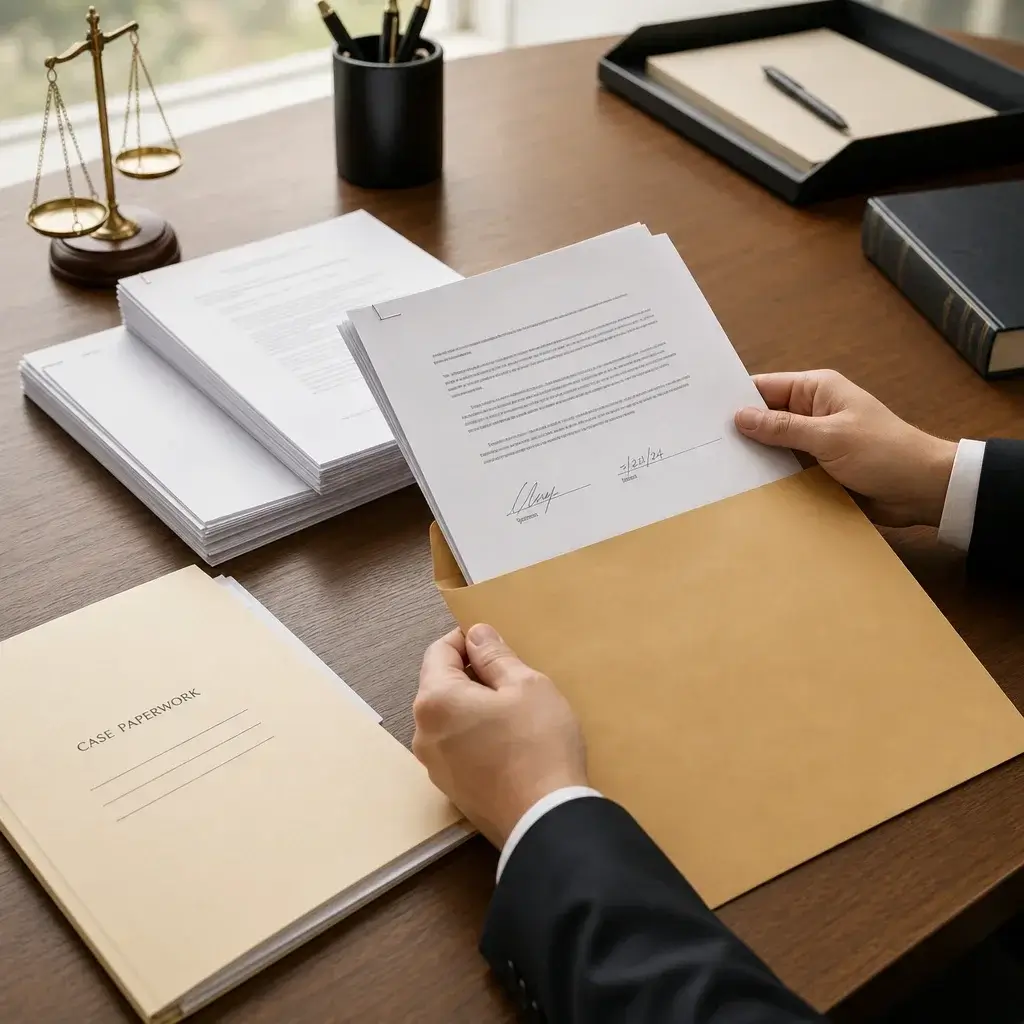
Typed letters are usually easier for the court to read than handwritten ones. A handwritten letter is not automatically better or more sincere. What matters more is clarity, truth, and whether it is signed and dated.
Keep the letter to about 1 page, or up to 2 pages if truly necessary. Put the date at the top, identify the case, sign the letter, and keep a copy. If there are attachments, label them clearly and do not bury the court in paper.
The usual practice is to give the letter to your lawyer, who can decide when and how to tender it. Do not walk into court and hand an apology directly to the judge without guidance. In many cases the Crown will also see the letter because it forms part of the sentencing material, so write it expecting both sides and the judge to read it. Timing matters too. A letter is most useful when it is prepared before sentencing and is consistent with the final plea position.
Court letter vs victim letter: they are not the same
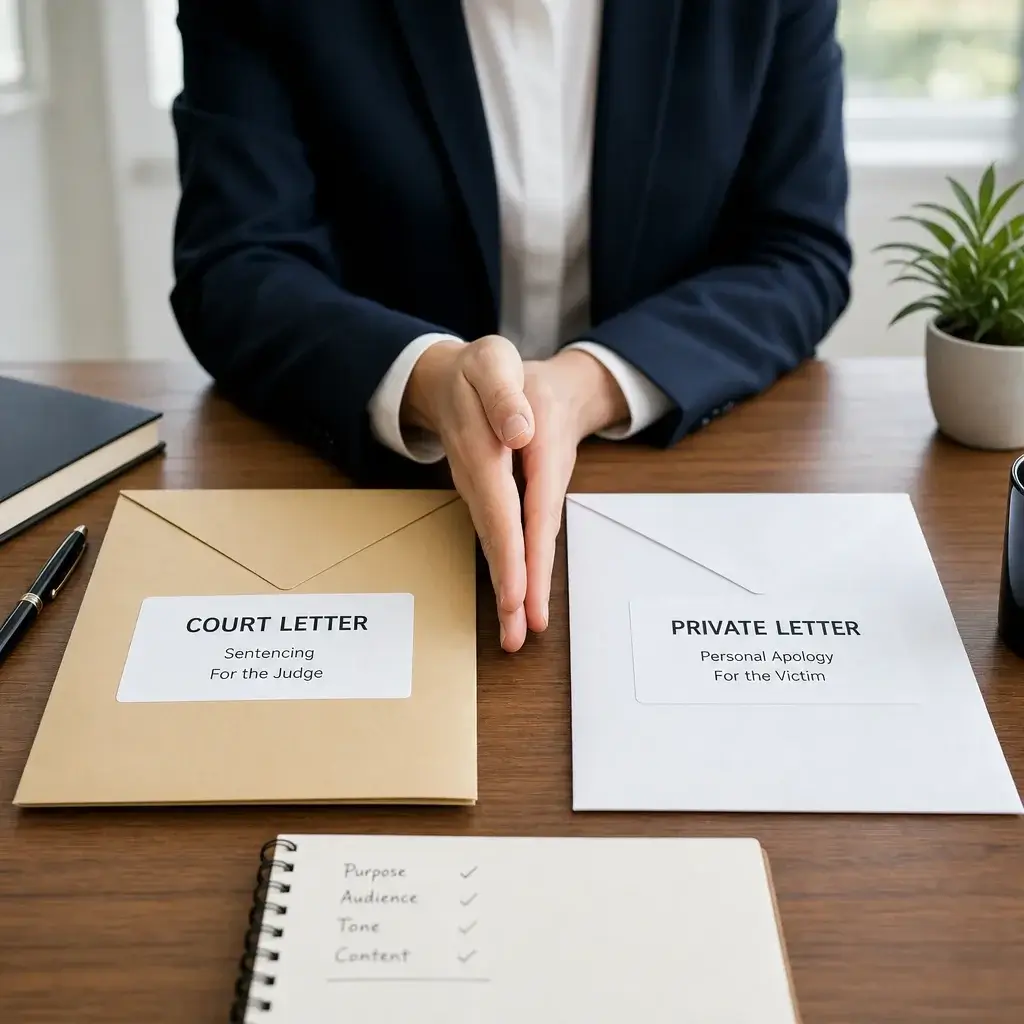
A letter to the court is different from an apology letter to the victim. The court letter is about responsibility, harm, and rehabilitation for sentencing. A victim letter is personal communication and can raise safety, legal, and bail issues.
You should not send an apology letter to a victim if you have a no-contact condition, bail term, release order, probation term, or any other restriction that bars communication. Judicial interim release, which most people call bail, often includes no-contact conditions in assault and domestic cases. Breaching those conditions can lead to a separate criminal charge.
If there is no legal barrier and your lawyer agrees a victim letter is appropriate, keep it shorter and more careful than a court letter. Do not ask for forgiveness. Do not ask the person to help your case. Do not minimize what happened.
| Court letter | Victim letter |
|---|---|
| Addressed to judge or court | Addressed to the person affected |
| Used for sentencing material | Personal communication with legal risk |
| Explains responsibility and rehabilitation | Focuses on harm and apology only |
| Usually tendered through counsel | Should not be sent without legal advice if restrictions exist |
| May mention personal consequences respectfully | Should not seek leniency or case help |
Short victim-letter template
Dear [Name], I am sorry for my actions and for the harm and fear I caused you. I accept responsibility for what I did. I understand that my conduct affected your sense of safety and trust. I am taking steps to address my behaviour through [counselling / treatment / programming]. I am not writing to ask anything from you. I am writing to acknowledge the harm I caused and to express my sincere apology. Sincerely, [Name]
That is as far as I would usually go in an example of apology letter to victim wording. In domestic or no-contact cases, get legal advice before sending anything.
Special note for domestic violence, police victim, and other assault variants
The same core structure works across assault cases, but the content has to fit the type of assault. In an apology letter to court for domestic violence matters, the court will usually expect direct recognition of fear, trust, family impact, and any need for counselling or partner-violence programming.
Where the complainant is a police officer, the letter should acknowledge the seriousness of using force against someone performing lawful duties, if that is the admitted conduct. It should not turn into an argument about the arrest. If the facts remain disputed, the wording must be especially careful.
Generic language is the fastest way to make a letter sound false. An apology letter to police officer for assault allegations should not read the same as one for a domestic assault or a fight outside a club.
Attachments checklist: what to submit with the apology letter
The letter is usually stronger when it is part of a clean sentencing package. Possible attachments include:
- Character reference letters
- Counselling or therapist letters
- Anger management proof
- Addiction treatment records
- Program certificates
- Employment confirmation
- School or training records
- Medical material if genuinely relevant
- Proof of voluntary treatment steps
- A draft reviewed by your lawyer before filing
Every attachment should be genuine, current, and consistent with the plea and the disclosure. A short letter plus 3 to 6 useful attachments is usually better than a stack of irrelevant documents.
Some facts belong in the letter and some belong in attachments. Put your remorse, responsibility, and key steps in the letter. Put supporting proof, like attendance letters or employment confirmation, in separate documents.
If English is not your first language or you need help drafting
Simple English is fine. Judges are not grading style. They are reading for truth, responsibility, and sincerity. If English is not your first language, you can use an interpreter, a trusted support person, or your lawyer to help you prepare the letter.
If someone helped translate or organise the letter, that is usually better than pretending you wrote polished English alone. The important point is that the content must still be yours. Cultural background can explain communication style, but it should not be used to avoid responsibility.
Can you use AI to draft a court apology letter?
AI can help with structure, tone, and editing, but it should never invent facts, treatment history, dates, remorse, or personal details. If an AI tool writes a polished but false story, the letter becomes dangerous because the Crown or judge may test those claims against disclosure and attachments.
The safest use of AI is mechanical. Use it to build a checklist, shorten a draft, or improve grammar. Then rewrite the letter in your own words and make sure every sentence is true. If you are pleading guilty or preparing for sentencing, have a criminal lawyer review the draft so it matches your plea and does not create avoidable problems.
Quick checklist before you hand the letter to your lawyer or the court
Use this last review before the letter is tendered:
- It matches the plea actually entered
- It does not contradict the agreed facts
- The salutation is respectful and correct
- The letter is signed and dated
- It clearly accepts responsibility
- It names the harm caused
- It avoids blame-shifting
- It mentions real rehabilitation steps
- Any dates or program details can be proven
- It is in your own voice, not copied
- It does not ask for a specific sentence
- Your lawyer has reviewed it
Red flags are just as important:
- Anger toward the complainant
- Complaints about police or witnesses
- Unsupported claims about treatment
- Over-explaining the incident
- A request for the judge to “go easy”
- Language that sounds like a template
FAQ
How to write an apology letter for assault?
Write it for sentencing, not for argument. State responsibility, acknowledge harm, give brief context without excuses, list rehabilitation steps, and close respectfully. Keep it to about 300 to 600 words if you can.
Can an apology letter help in a legal situation?
It can help present remorse, insight, and rehabilitation at sentencing, but it is only one factor among many. It does not erase the seriousness of the offence, prior record issues, injuries, or breaches.
How to write a good apology letter for court?
Use plain language, keep it short, and make sure it matches your plea. A good court letter is accurate, signed, dated, and usually typed for readability.
How to write a letter of apology to a victim?
Keep it brief, accept responsibility, acknowledge harm, and do not ask for anything in return. Do not send it at all if a no-contact term or safety concern exists unless your lawyer says it is lawful and appropriate.
What are the 5 R’s of an apology?
A useful writing framework is recognise, responsibility, remorse, repair, and reform. It is not a court rule or legal test.
What not to say in an apology letter?
Avoid conditional apologies, blame, attacks on the complainant, complaints about police, and requests for a particular sentence. Those points usually weaken credibility.
How do you write a strong apology letter?
A strong letter is specific, restrained, and backed by action. It says what you did, what harm you understand, and what you have done since to change.
Should I write an apology letter if I am pleading guilty to an assault charge?
Usually it is worth considering for sentencing, but only if it is truthful and consistent with the plea. If the facts are still disputed, get legal advice before you admit anything in writing.
How should I address a magistrate or judge in an apology letter?
In Ontario criminal courts, “Your Honour” is generally the safe form if you do not know the judge’s preferred title. Your lawyer can confirm the right form of address for the specific court.
Should the apology letter be typed or handwritten?
Typed is usually easier to read. Handwritten is not automatically more persuasive.
When should I give my apology letter to the court?
Usually before or at sentencing through your lawyer, once the plea position is settled. Do not leave this to the last minute if you want supporting documents included.
Should I show my apology letter to the prosecutor?
In practice, sentencing materials are often seen by the Crown as well as the judge. Your lawyer should decide when and how the letter is provided.
Can I use the same format for a domestic violence case?
The structure is similar, but the content must fit the context. Domestic cases need careful wording about safety, trust, compliance with orders, and treatment.
A final point. If you are preparing a letter for sentencing, the safest next step is to have it reviewed before it is filed or handed up. I review these letters the same way a Crown will read them: for contradictions, harmful wording, and claims that need proof. That does not guarantee any result. It does help make sure the letter says what it should, and does not say what it should not.