

 Based on 116 Verified Google Reviews
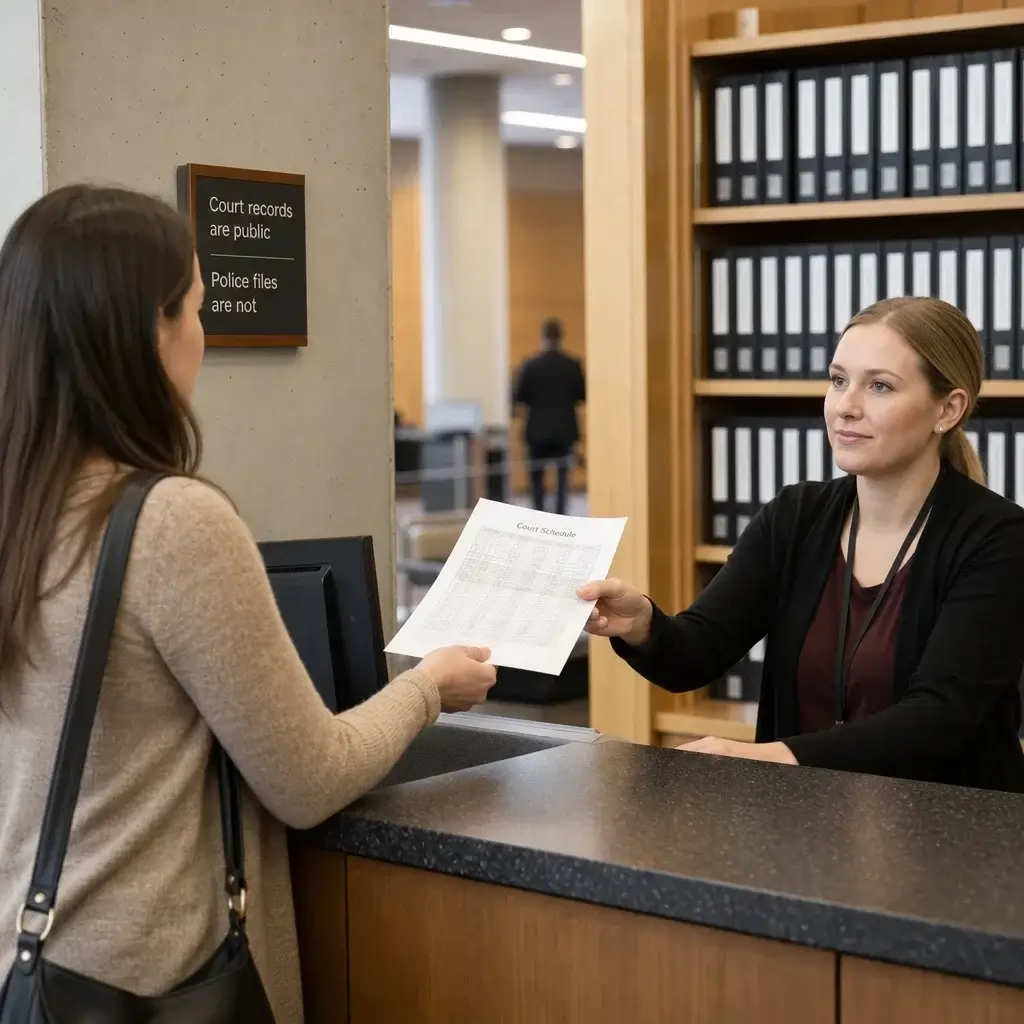
Are assault charges public record in Canada? Usually, yes in some form. But public access normally means court information, not open access to police files or someone’s full criminal record.
If you only need the short answer: assault charges are often visible through public court records, hearing lists, registry files, and sometimes published decisions. Access still depends on the stage of the case, the province, and limits like youth protections, publication bans, sealing orders, and court-specific access rules. This is general information, not legal advice for a specific case.
Direct answer: are assault charges public record in Canada?
Assault charges are often public once they enter the court process, because Canadian courts operate on an open-court principle . That does not mean every related document is online, free, or available to everyone in the same way.
Public visibility usually attaches to court-facing material like daily court lists, file indexes, scheduled appearances, charge wording in a court file, and published judgments on services like CanLII . Police investigative files, witness statements, and private background databases are different categories.
Access can be restricted even in an assault charge public record Canada search where the case exists. Youth matters are protected under the Youth Criminal Justice Act, and publication bans or sealing orders can limit names, evidence, or reporting details .
Court record vs police record vs criminal record: what people usually mean
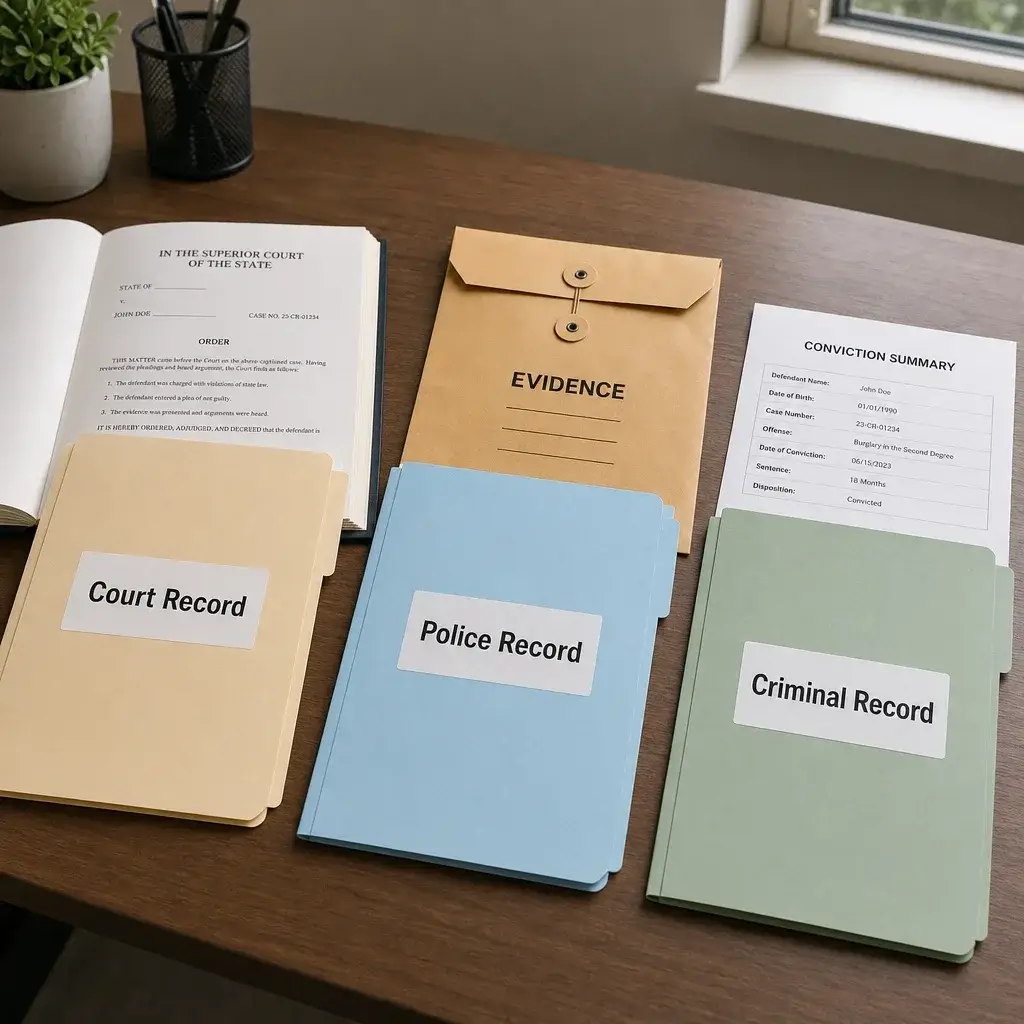
A court record is not the same thing as a criminal record in Canada. A court record tracks a case before the courts, while a criminal record usually refers to conviction-based information rather than every allegation or appearance .
A police record is broader than a court file and can include complaints, investigations, occurrence reports, and non-conviction interactions. Members of the public cannot simply search police databases the way they search a public court list .
A published judgment is narrower still. It is a written court decision made public through a database like CanLII, but many criminal cases end without a reported written decision at all .
Daily court lists are scheduling tools, not full case histories. They can show a name, courtroom, date, and appearance type, but they do not replace the complete file at the courthouse .
When an assault charge becomes publicly visible
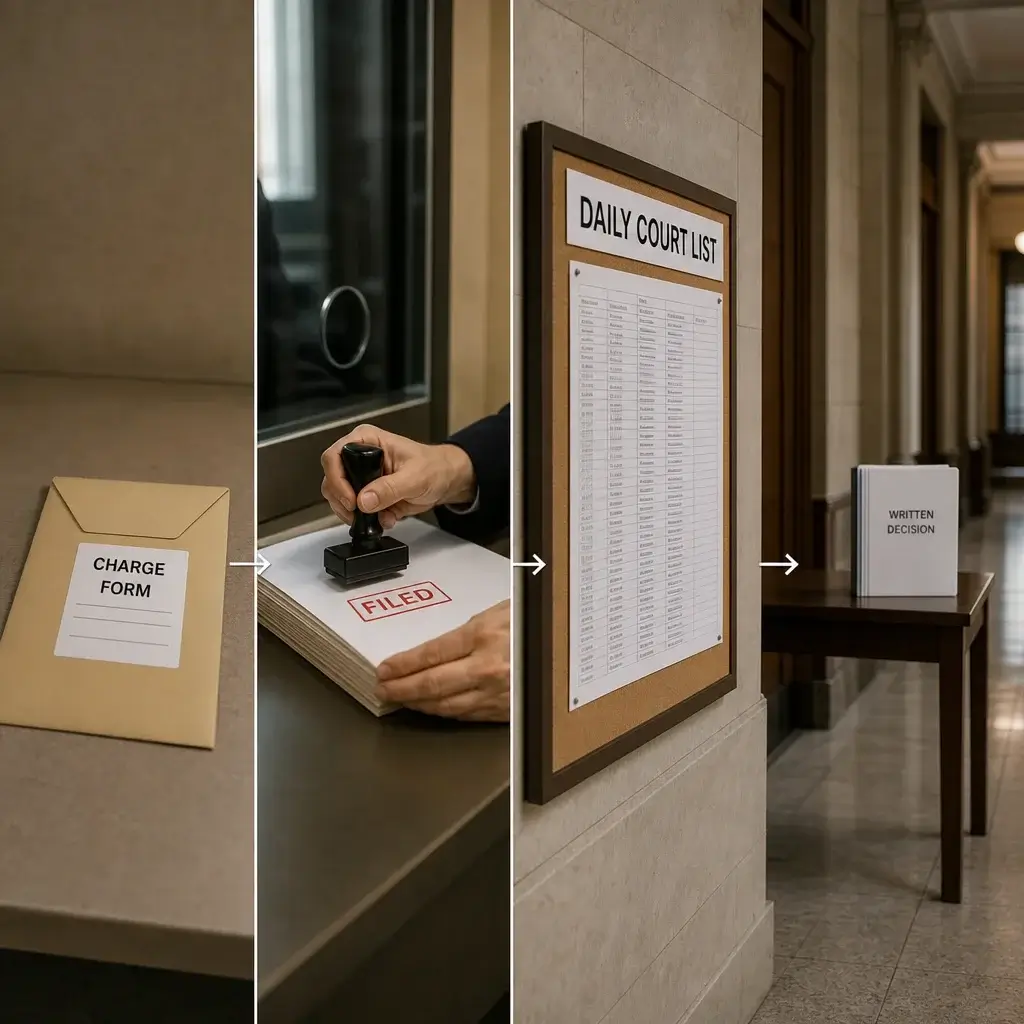
An allegation does not automatically create a public court record. Public visibility usually starts after a charge is laid and the case is brought into the court system through process such as an information, summons, appearance notice, undertaking, or arrest leading to court .
Online visibility and courthouse visibility do not always happen at the same time. A case may appear first at the registry, then on a daily court list, and only much later in a published decision if the judge releases written reasons .
Search timing can differ by court and system. A new charge may show up the same day, several days later, or only after the first appearance is entered into the local system .
The practical timeline is usually: allegation, then charge and process, then first appearance, then ongoing hearings, then final result, and sometimes a published judgment .
What parts of an assault case are usually public, and what are not
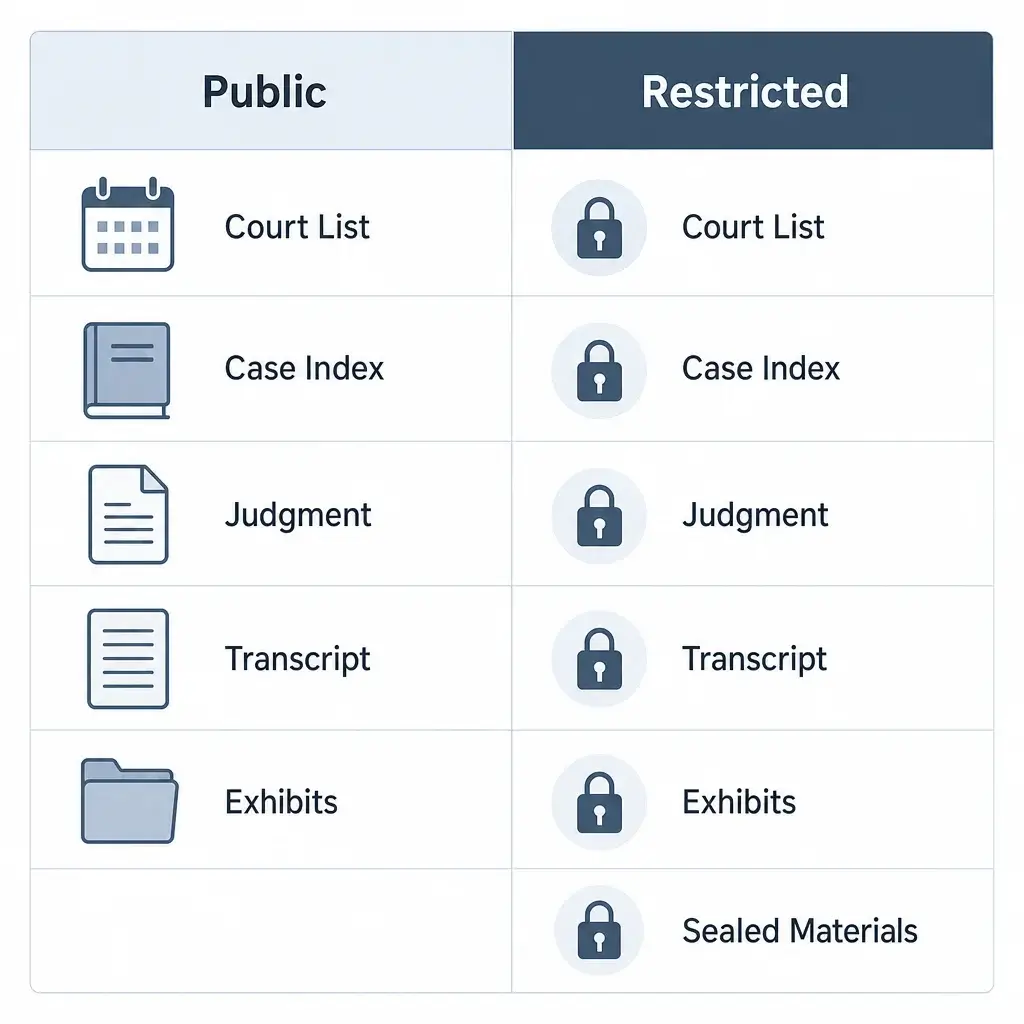
The easiest way to answer whether criminal charges public record Canada searches work is to separate each record type.
| Record type | Usually public? | When accessible | Common limits | Where to check |
|---|---|---|---|---|
| Daily court lists | Often yes | Near the hearing date | May omit some details; youth and ban issues | Court website or courthouse |
| Basic case details / file index | Often yes | Once the case is in the court system | Search tools vary by province | Online tool or registry |
| Appearance dates and courtroom | Often yes | After scheduling | Last-minute changes happen | Daily list or registry |
| Charge wording in court file | Often yes | Once filed in the court record | Copy access can vary | Registry counter |
| Informations / indictments | Sometimes | After filing, subject to local access practice | Copying or viewing rules differ | Registry |
| Docket sheet or endorsement history | Sometimes | During the case and after disposition | Not every province offers public online dockets | Registry or case lookup |
| Published judgments | Sometimes | Usually after a written decision is released | Many routine appearances never produce one | CanLII |
| Transcripts | Often by request | After the hearing is recorded and processed | Fees and forms usually apply | Court transcript process |
| Audio recordings | Sometimes by request | After the hearing | Strong court controls are common | Court-specific request process |
| Exhibits | Sometimes, but more restricted | If filed and not sealed | Privacy, evidentiary, and access limits | Registry or court order process |
| Search warrants / ITO materials | Sometimes | Often after execution and filing | Sealing orders can block access | Court file where filed |
| Production orders | Sometimes | Often after execution and filing | Investigation and sealing issues | Court file where filed |
| Arrest warrants | Sometimes, but conditional | Access depends on status and stage | Unexecuted warrants are commonly restricted | Registry if reflected on file |
| Bench warrants | Sometimes, but conditional | Usually if the court file reflects them | Active enforcement concerns may limit access | Registry |
When names, charges, and case details can be found before any conviction
A person’s name can be public before any finding of guilt. If the case appears in a public court list or registry, the public may learn the accused person’s name, the charge, and the next court date before trial or conviction .
That does not prove the allegation. A charge is an accusation that must still be tested in court, and public access to the file does not change the presumption of innocence .
Names may appear from more than one source. Police news releases, daily court lists, online case tools, courthouse files, and written decisions can each reveal overlapping but not identical information .
Names can also be withheld or reduced to initials where a youth matter, a publication ban, or another court order limits identification. Those protections can affect search results even when the case itself exists .
How to find an assault charge if you only know the person’s name
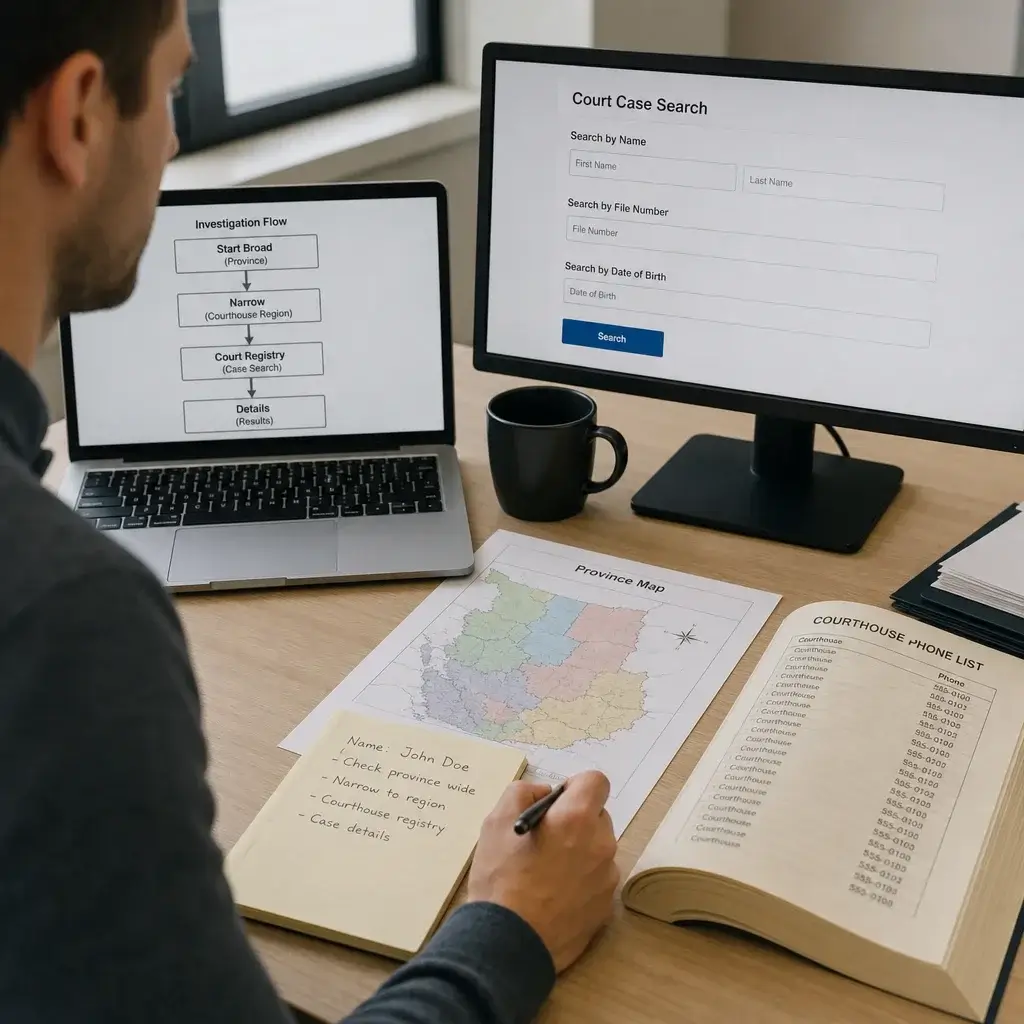
The most reliable method is to start with the province and court, then move from broad public tools to the specific courthouse registry. That works better than searching random websites for free public court records Canada results.
Use this decision tree when you only know a name:
- Identify the province or territory where the case is likely filed .
- Check the official court or government case search tool for that jurisdiction, if one exists .
- Check daily court lists for the likely courthouse, city, or date range .
- Contact the courthouse registry with the full name and any approximate date or location .
- Ask for file details, appearance dates, or copy procedures if a case is confirmed .
- Use CanLII only for published decisions, not as a complete case finder .
Useful search inputs are the full legal name, spelling variants, approximate city, approximate hearing month, and any known courthouse. A file number helps a lot, but many public searches start without one .
No results do not always mean no case. The file may not be posted yet, the jurisdiction may be wrong, the name may be misspelled, the matter may be youth-protected, or a ban or sealing order may limit what appears publicly .
Province-by-province: where to check assault charge court records in Canada
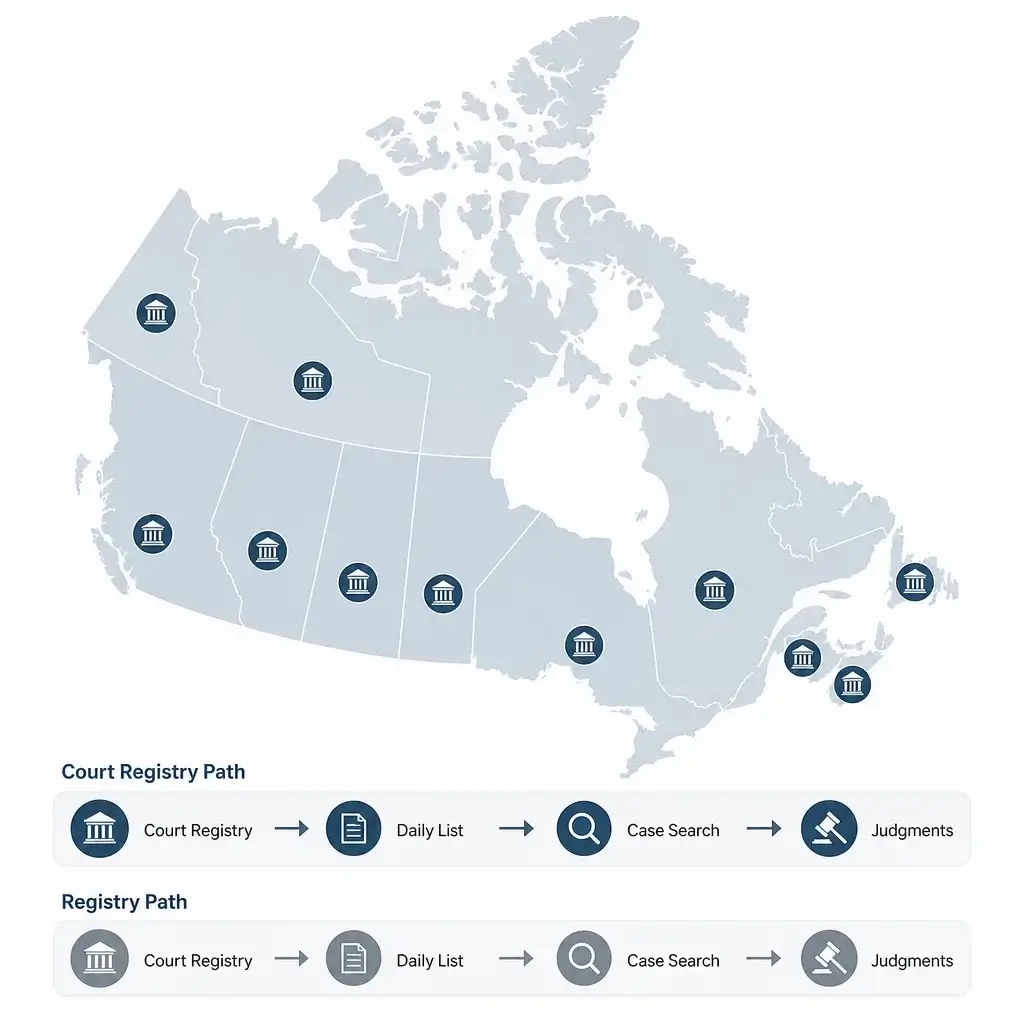
There is no single national criminal court portal for the public. Canada-wide searching usually means checking each province or territory separately, then using CanLII for published decisions only .
| Jurisdiction | Online criminal lookup for public? | Daily court list access? | By-name search likely? | Registry path | Judgments |
|---|---|---|---|---|---|
| Ontario | Limited official public tools may exist depending on court/service | Yes, through court list tools or local posting | Sometimes, depending on tool | Ontario court registry | CanLII |
| British Columbia | Public court information may be available through BC court services tools | Yes | Often tool-dependent | BC court registry | CanLII |
| Manitoba | Online public criminal lookup is more limited | Varies | Often registry-driven | Manitoba court office/registry | CanLII |
| Alberta | Public online access is limited compared with some civil systems | Varies | Often registry-driven | Alberta court clerk/registry | CanLII |
| Saskatchewan | Limited public online criminal lookup | Varies | Often registry-driven | Court registry | CanLII |
| Quebec | Public access exists, but tools and language matter | Varies | Tool-dependent | Court office | CanLII |
| Nova Scotia | Limited public online criminal lookup | Varies | Often registry-driven | Court administration office | CanLII |
| New Brunswick | Limited public online criminal lookup | Varies | Often registry-driven | Court office | CanLII |
| Newfoundland and Labrador | Limited public online criminal lookup | Varies | Often registry-driven | Court office | CanLII |
| Prince Edward Island | Limited public online criminal lookup | Varies | Often registry-driven | Court office | CanLII |
| Territories | Usually more registry-based than database-based | Varies | Often registry-driven | Territorial court office | CanLII |
If a province does not offer a strong public online criminal search, the practical next step is the court registry. That is where many criminal court file checks, scheduling questions, transcript requests, and copy requests begin .
Ontario: how to look up someone’s charges
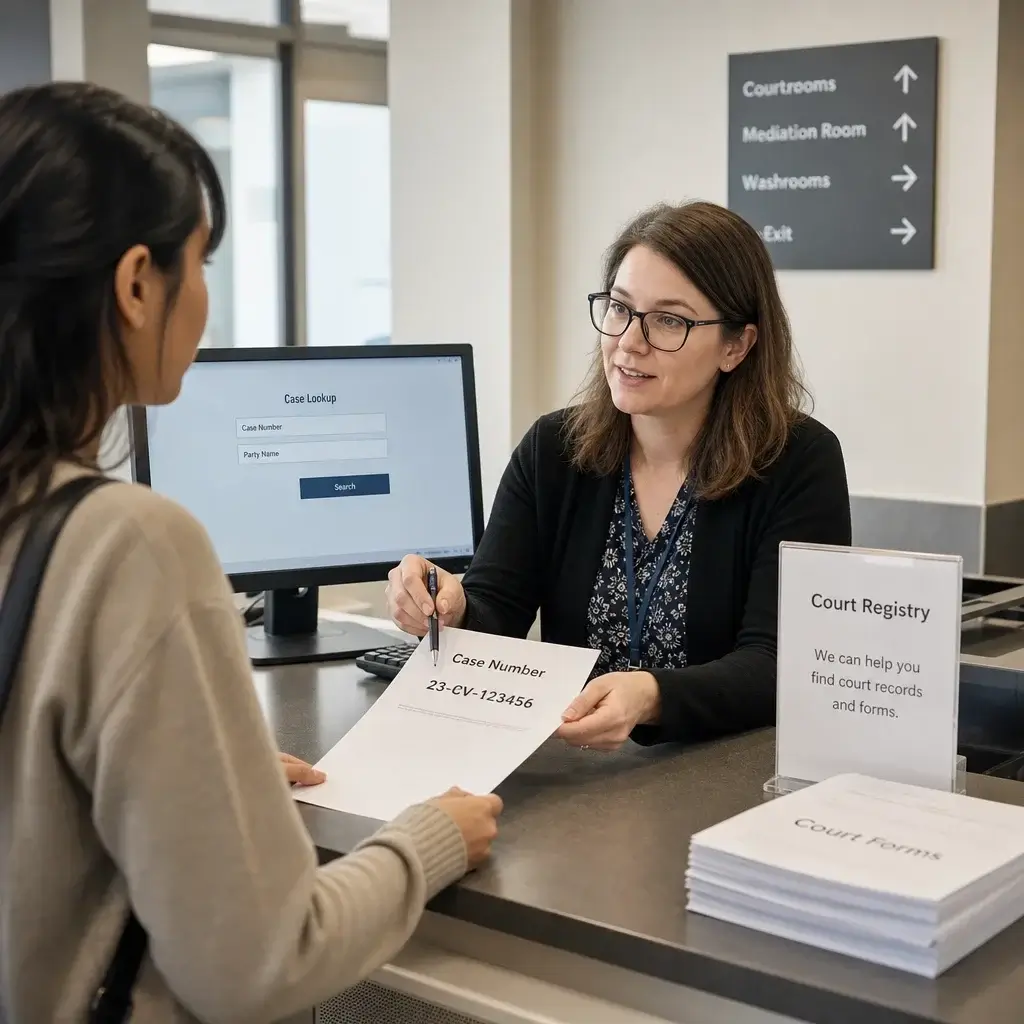
If you need to know how to look up someone’s charges in Ontario, start with official Ontario court information sources rather than third-party record sites. A criminal court case lookup Ontario search is only useful if the source is the court or government itself .
The first path is the relevant Ontario court list or case information service for the courthouse involved. Daily court lists can help you find the date, time, courtroom, and type of appearance if the matter is already scheduled .
If online information is incomplete, the next step is the courthouse registry. Give the person’s full name, an approximate date, and the likely court location if known, because registry staff usually need at least those identifiers to search efficiently .
The court file may show charge wording, file number, and appearance history even where a full online by-name search is limited. Access to copies, transcripts, or audio usually requires a separate request process rather than a simple online click .
Ontario users often confuse public criminal records Ontario with public court records. Free public court records Ontario access may cover scheduling or file details, but it does not mean the public can pull someone’s full criminal record from CPIC .
British Columbia: can you look up someone’s charges in BC?
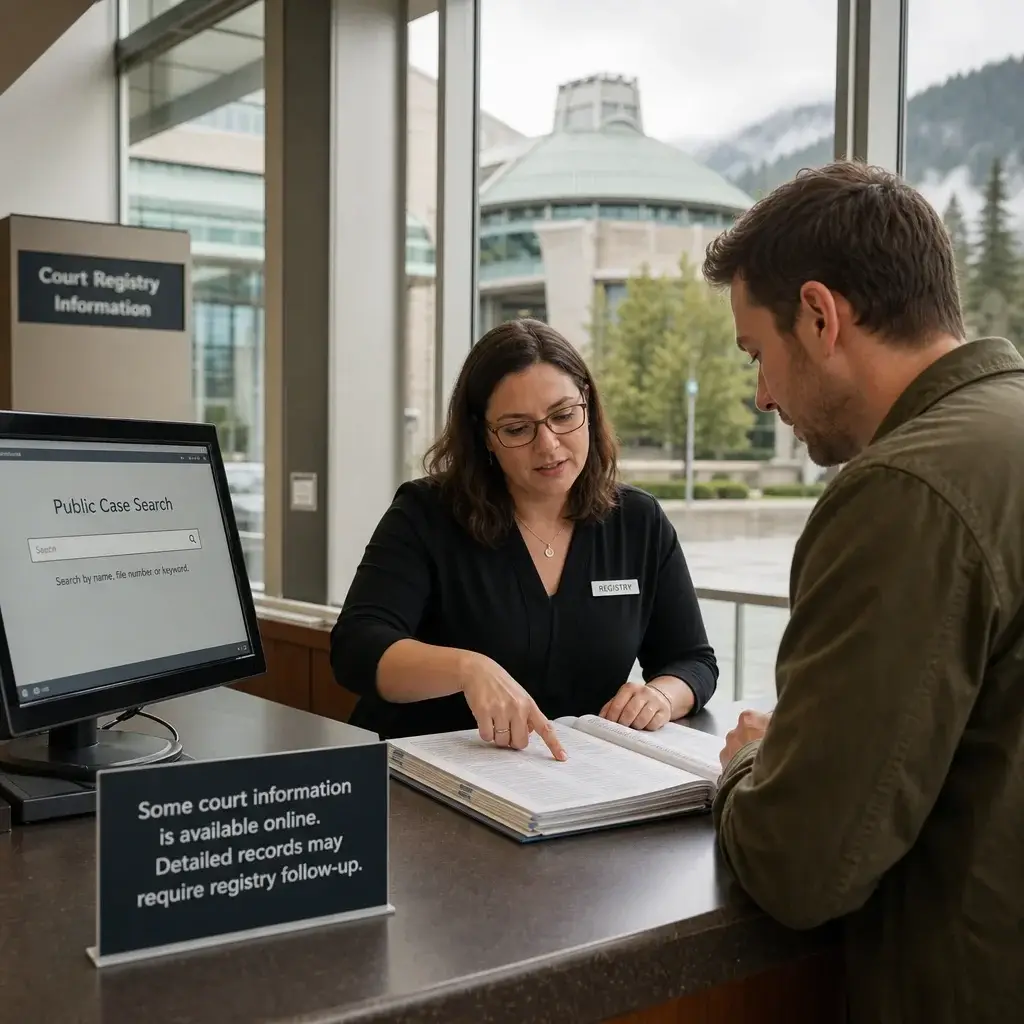
Yes, you may be able to look up some criminal court information in British Columbia through official court-access tools, but the scope of public access depends on the system and the status of the file. A CSO criminal search or BC court records by name search is about court information, not unrestricted access to police or criminal-record databases .
Public court records BC access may include file-level information, hearing details, or case status depending on the tool and the court. More detailed materials can still require a registry request or in-person follow-up .
Some BC tools distinguish between what the public can see and what counsel or justice participants can access. That is why a public user may find the existence of a case but not every underlying document .
If an online search does not answer the question, the BC court registry is usually the next step. Have the person’s name, the likely courthouse, and an approximate date range ready before you call or attend .
Manitoba and other provinces: how to look up court cases
If you want to know how to look up court cases in Manitoba, expect more registry-based searching than in provinces with stronger public web tools. In practice, that often means contacting the court office with the name, likely location, and approximate date of the matter .
A Manitoba search may also involve separating court-file information from other judicial authorization records. Even where another public registry exists for a specific kind of material, it does not replace the ordinary criminal court file search path .
In many other provinces, the same pattern applies. Start with the provincial court website, check whether daily court lists or case lookup tools exist, and then contact the registry if the online system is limited or unclear .
Do not assume every province offers consumer-friendly free public court records Canada access for adult criminal files. Registry staff and official court instructions are often the real access point outside Ontario or BC-style tools .
Publication bans, youth cases, sealed files, and other limits on public access
A publication ban does not always erase the existence of the case. It usually restricts what can be reported or who can be identified, while some basic court information may still remain accessible in the file or list .
Youth criminal matters public Canada searches are heavily limited because the Youth Criminal Justice Act protects the identity of young persons in most situations . That is one of the clearest exceptions to ordinary open-court access.
A sealing order can restrict access to part of a file or to an entire package of materials, especially where warrant materials or sensitive evidence are involved. When that happens, the court record may exist publicly in a partial way but not be open for full inspection .
Common reasons you cannot find a case are: youth protection, a publication ban, a sealing order, an ongoing investigation, a recent filing that is not posted yet, or a search in the wrong jurisdiction .
Are warrants, bail materials, and pre-trial records public in assault cases?
These materials are sometimes public, but access is more conditional than access to a simple appearance date. The rule is not a clean yes or no across Canada.
Search warrants can become accessible after they are executed and filed with the court, but sealing orders can still block public inspection of the supporting materials . That is why search warrant public record questions often produce mixed answers.
Production orders follow a similar pattern. They may become part of the court record after execution and filing, but active-investigation concerns or sealing can restrict what the public can see .
Arrest warrants are not always publicly accessible before execution. Public access concerns are stronger once a warrant is reflected in the active court file, but unexecuted warrants often engage enforcement and safety concerns .
Bench warrants may appear in court records because they arise from missed appearances or court process, but what a member of the public can obtain still depends on the registry record and any active restrictions .
Bail materials and pre-trial records are often more sensitive than the basic docket. You may find hearing dates or the fact of a bail proceeding, but underlying allegations, surety details, exhibits, or recordings can be restricted or require a formal request .
What happens if the assault charge is withdrawn, stayed, dismissed, or ends in acquittal?
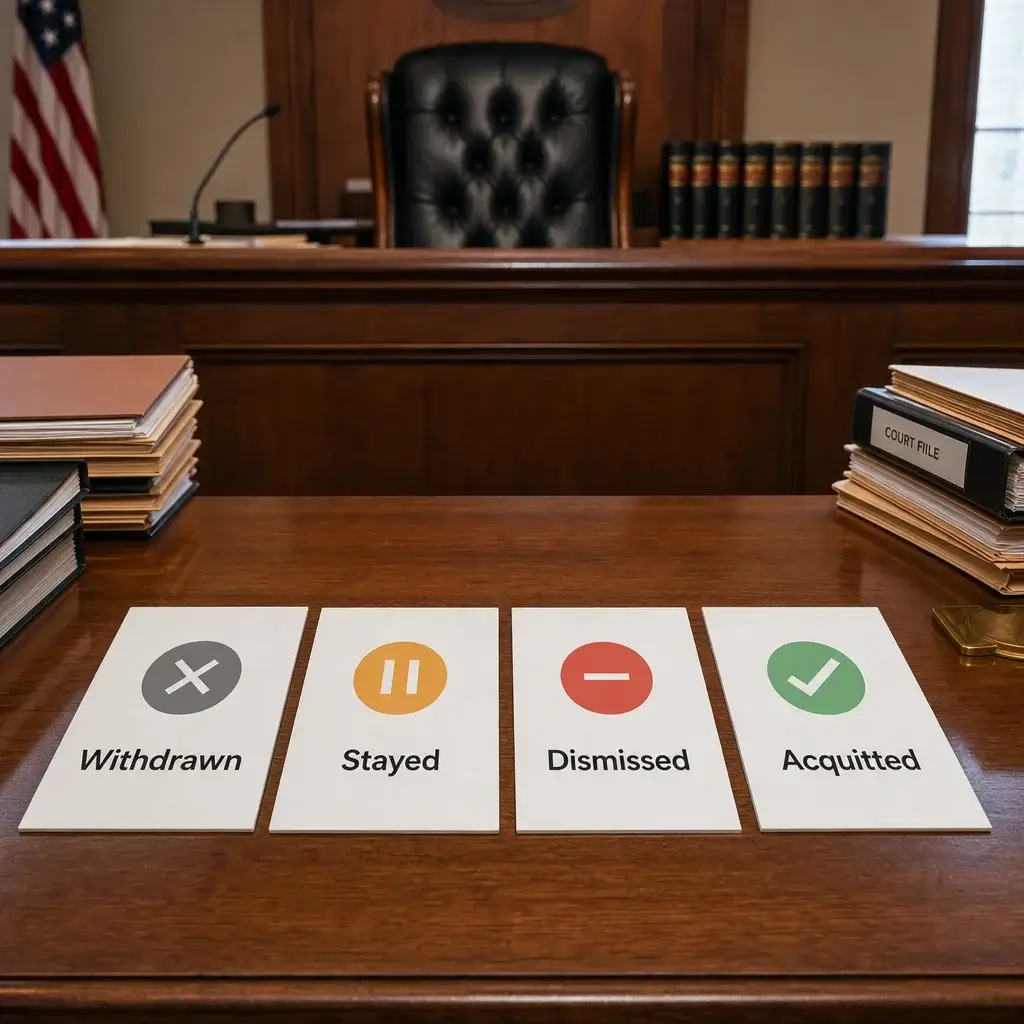
A non-conviction result does not always erase the public history of the case. The court may still show that a charge existed and how it ended, even where the person was not convicted .
Withdrawn assault charges can remain visible in some registry records or archived court materials, while disappearing from simpler public-facing search tools over time. That is why withdrawn assault charges searchable questions do not have one national answer .
Stayed assault charges can also remain traceable in historical court records even if the case is no longer moving forward. Some systems show the status clearly, while others display very little after the matter concludes .
Acquittals may still appear in public court records or in a published judgment if the court released reasons. An acquittal is a public outcome, but it is not a conviction and does not make the person guilty of the offence .
Dismissed matters raise the same distinction. The file history can survive even where the allegation does not result in a conviction-based criminal record .
Does assault count as a criminal record? How long does an assault charge stay on your record in Canada?
An assault charge alone is not the same as a criminal record. Does assault count as a criminal record? Only a conviction-based outcome usually contributes to a criminal record in the ordinary sense .
A charge can still be public even without a conviction because court records and criminal records are different systems. That is the key court records vs criminal record Canada distinction people miss .
How long does an assault charge stay on your record in Canada does not have one fixed national answer, because court records, police records, and criminal records follow different retention and access rules . A charge can remain visible in some court or police contexts even if it never became a conviction.
Private individuals generally cannot look up someone’s criminal record in Canada just by searching online. A formal criminal record check usually depends on authorized processes, identity matching, and legal access rules rather than open public browsing .
If you are asking can I check if someone has a criminal record in Canada, the practical answer is usually no unless there is consent, lawful authority, or a specific legal process. Public court data may show charges or outcomes, but it is not a substitute for direct criminal-record access .
How to request transcripts, audio, or file copies
Once you locate the case, the next step is to gather the right identifiers before asking for records. Most courts will want the court location, hearing date, file number if known, party name, and type of proceeding .
Transcript requests are usually handled through a formal process rather than an informal email. Courts often require a form, a clear hearing date, and payment based on the court’s transcript rules and the length or urgency of the order .
Audio recording access is more controlled than access to a simple docket entry. Some courts permit requests in limited circumstances, while others impose stricter review, undertakings, or use restrictions .
Exhibits and file copies also follow local rules. A document may be viewable at the counter but not automatically releasable in copy form, especially where privacy, witness safety, or evidentiary concerns are engaged .
Use this checklist before contacting the registry:
- full legal name of the accused or party
- courthouse and city if known
- file number if known
- hearing date or date range
- type of proceeding, such as bail, trial, or first appearance
- what you want: transcript, audio, file copy, exhibit, or scheduling information
Quick answers for victims, family members, and accused persons
Victims and family members can often track a case through public hearing dates, registry information, and victim-services channels where available. The court registry can usually tell you what basic public information is available even if it cannot give legal advice .
Accused persons should know that names, charges, and court dates can become public before conviction. That public visibility may continue in some form even if the charge is later withdrawn or the person is acquitted .
Researchers and journalists should check for publication bans, youth restrictions, and sealing orders before using or sharing case details. Open court access does not cancel restrictions on identifying protected people or publishing restricted evidence .
If you need case-specific advice about public visibility, publication bans, court-file access, or defending an assault charge, speak to a criminal defence lawyer about the actual file. General rules help, but the answer can turn on the court, the stage, and any order made in that case.
FAQ
Are all court cases public record in Canada?
No. Canadian courts follow an open-court principle , but access is not absolute. Youth matters, publication bans, sealing orders, recent unposted files, and restricted warrant or exhibit materials can limit what the public can see.
Can you look up criminal charges in Canada?
Sometimes, yes through public court systems. You usually search by province, court, daily court lists, or courthouse registry rather than through one national database .
Can you find out what a person has been charged with?
Often, yes if the charge has entered the public court process and no restriction blocks access. The information may appear in a court list, registry file, online case lookup, or a published decision .
Can you look up someone’s charges in BC?
Sometimes, yes through official BC court-access tools or the court registry. What you can see depends on the tool, the case status, and any restrictions on the file .
How do I look up someone’s charges in Ontario?
Start with official Ontario court information sources and daily court lists, then contact the courthouse registry if you need more detail. The most useful identifiers are the person’s full name, likely court location, and approximate date .
How do I look up court cases in Manitoba?
Begin with Manitoba court information sources, then contact the registry because criminal lookup is often more registry-driven there. Have the name, likely location, and rough date range ready .
Are all court cases public record in Canada?
Not in full. Some basic information may be public while documents, exhibits, audio, or identities are restricted by law or court order .
Can you look up someone’s criminal record in Canada?
Not as a member of the public through an open online search. A criminal record check usually requires authorized access, identity confirmation, consent, or another legal basis .
Can I check if someone has a criminal record in Canada?
Usually not just by searching online. Public court data may show a charge or result, but it is not the same as a criminal record search .
Does assault count as a criminal record?
A charge alone does not. An assault conviction can contribute to a criminal record, while an allegation or pending charge is different .
How long does an assault charge stay on your record in Canada?
There is no single national timeline. Court records, police records, and criminal records have different retention and access rules, so you should not assume a non-conviction charge disappears everywhere at the same time .
What is the lowest charge for assault?
In plain language, people usually mean common assault, often called simple assault. It is still a Criminal Code offence, and the exact charge wording matters in any real case .
Are youth criminal matters public?
Usually not in the same way adult matters are. Youth identity protections under the Youth Criminal Justice Act sharply limit public naming and access .
What happens if there is a publication ban on an assault case?
The case may still exist publicly, but reporting or identifying certain details can be restricted. Always check the exact scope of the ban before using case information .