

 Based on 116 Verified Google Reviews
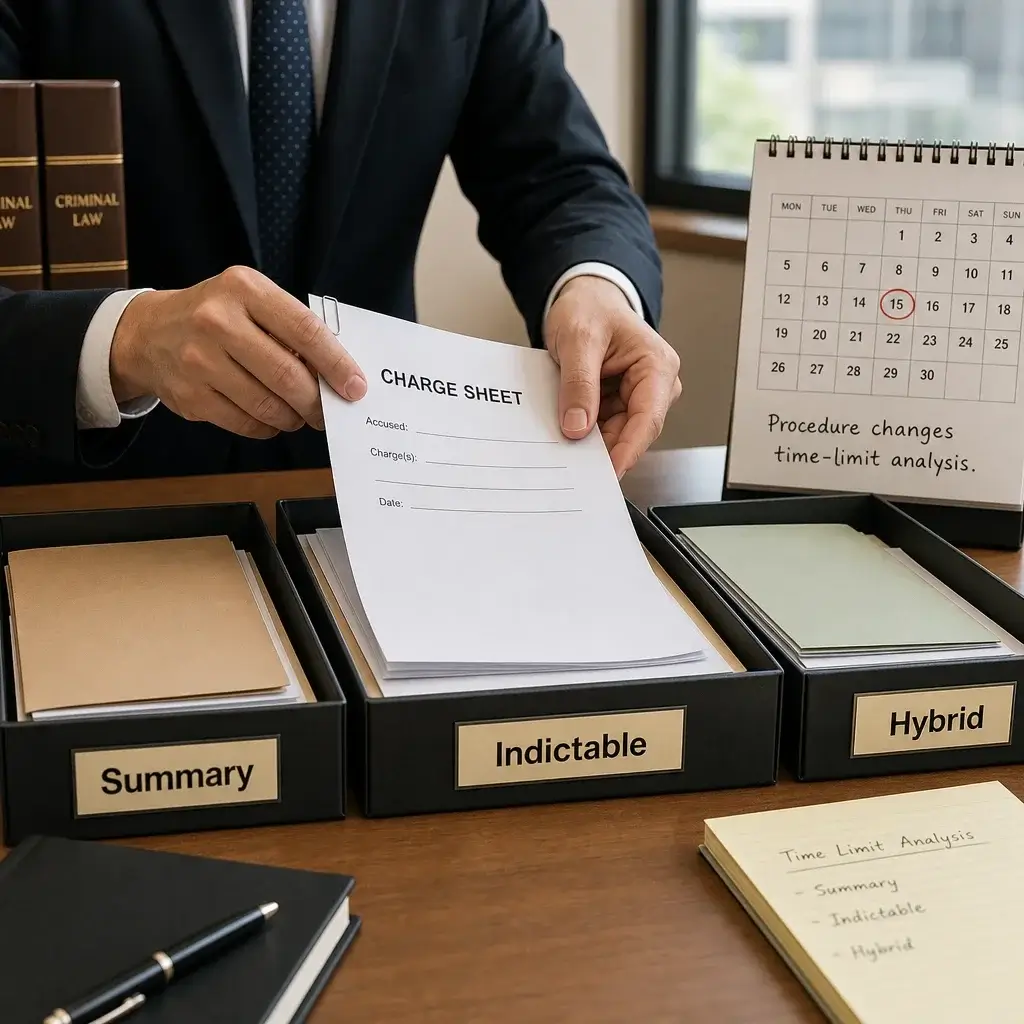
If you are searching for the statute of limitations for assault in Canada, the short answer is this: there is no single assault deadline that fits every case. The time limit usually turns on how the charge proceeds, because summary matters have a statutory deadline, while indictable matters generally do not .
This is where people get tripped up online. You will see old pages talking about 6 months and others talking about 12 months, but that point has to be checked against the current Criminal Code and the date of the alleged offence before anyone treats it as decisive . This page is general information, not legal advice on your specific case.
Direct answer: is there a statute of limitations for assault in Canada?
Summary box
– Assault time limits in Canada depend mainly on summary vs indictable vs hybrid procedure . – A pure or elected summary prosecution is subject to a statutory filing deadline under the Criminal Code . – An indictable prosecution is generally described as having no limitation period . – Many assault offences are hybrid, which means the Crown can elect summary or indictment . – You can still report an alleged assault years later, but whether charges can proceed depends on the offence, the Crown election, dates, and current law .
The main point is simple. There may be a limitation issue for some assault charges, but not for all of them, and you cannot answer that by looking at the word “assault” alone .
The reason is procedure. In Canada, the same incident may lead to an offence that is summary, indictable, or hybrid, and that classification changes the time-limit analysis .
The internet confusion comes from a real legal issue. Older sources often refer to a 6-month summary limitation period, while newer sources may refer to 12 months, so the exact rule should be confirmed against the current Criminal Code, including section 786(2), and the date of the alleged offence before anyone relies on it .
What counts as assault under the Criminal Code of Canada?
Assault under the criminal code of canada starts with section 265. In plain English, assault includes intentionally applying force to another person without consent, attempting or threatening by an act or gesture to apply force if the other person has reasonable grounds to believe you can carry it out, and accosting or impeding someone while openly wearing or carrying a weapon or imitation weapon .
Physical injury is not required. A push, grab, shove, spit, or unwanted slap can count, and so can swinging and missing or moving in with a raised fist if the other person reasonably fears immediate force .
Physical contact is not always required. The law can treat attempted force or threatening conduct as assault when the threat is immediate and believable in the moment, not just rude words said from a distance .
Consent matters, but not every apparent yes is legally valid. The Criminal Code also says no consent is obtained where submission comes from force, threats, fraud, or the exercise of authority .
In Ontario, people sometimes search for ontario criminal code assault, but the offence still comes from the federal Criminal Code across Canada. Ontario courts apply the same Criminal Code sections as the rest of the country .
What does Criminal Code 266 mean? Simple assault explained
Criminal Code 266 Canada usually refers to the offence provision that makes common or simple assault punishable. Section 265 defines what assault is, and section 266 makes that assault an offence and sets out that it is punishable either on summary conviction or on indictment .
That is why people use terms like Simple assault Canada, Section 266 Criminal Code, and Assault Criminal Code 266 almost interchangeably. They are usually talking about the basic form of assault, often called common assault, rather than assault with a weapon, assault causing bodily harm, or aggravated assault .
The lowest level assault charge in everyday language is usually common or simple assault under section 266. That does not make it minor in every case, because a section 266 allegation can still affect bail, employment, family contact, immigration status, and criminal record consequences .
Section 266 is generally treated as a hybrid offence, which means the Crown can elect to proceed summarily or by indictment . That election matters because it can affect limitation arguments, procedure, and sentencing exposure.
Summary vs indictable vs hybrid assault: why the time limit changes
A summary offence is the lower-procedure track in criminal court and is the one that raises the usual statute of limitations canada summary offence issue. A summary prosecution is the category that may be barred if the statutory filing deadline expired before the information was laid .
An indictable offence is the more serious procedure track. For limitation purposes, indictable offences in Canada are generally described as having no statute of limitations .
A hybrid offence gives the Crown a choice. The prosecutor can elect to proceed summarily or by indictment, and that election can decide whether a limitation defence is even available .
This is why a late-reported assault cannot be answered by offence name alone. You need the exact charge, the charging document date, and how the Crown is proceeding before you can assess any assault statute of limitations canada argument .
Summary vs indictable vs hybrid comparison
| Procedure type | What it means in plain English | Time-limit effect |
|---|---|---|
| Summary | Lower-procedure track for less serious prosecution | Statutory filing deadline applies |
| Indictable | More serious prosecution track | Generally no limitation period |
| Hybrid | Crown chooses summary or indictment | Time-limit issue may depend on election |
The 6-month vs 12-month confusion
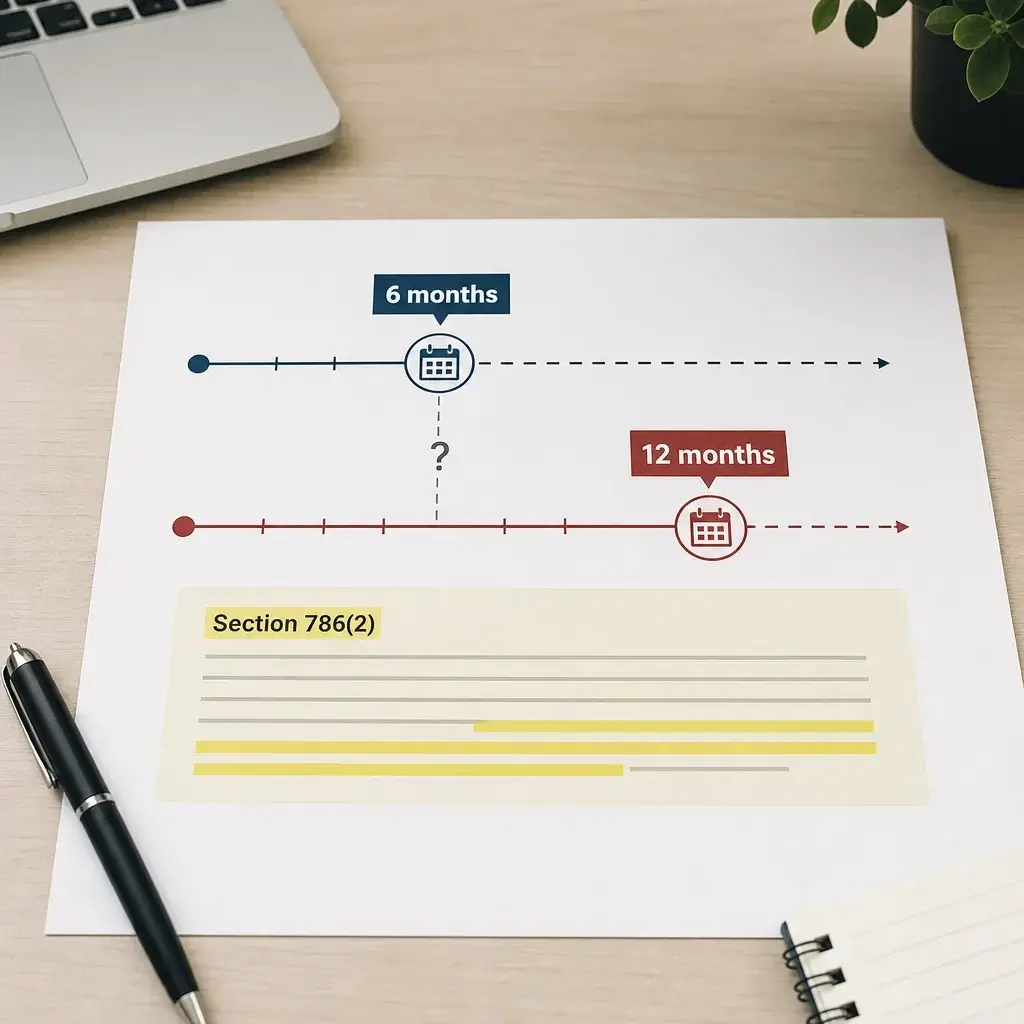
The common 6-month vs 12-month conflict is real, and you should treat older internet pages carefully. The relevant Criminal Code rule has been discussed for years in exactly those terms, but the correct answer depends on the current text of the Code and sometimes the date of the alleged offence .
The safe answer is not to guess. If timing is central to a live case, a lawyer should check the present wording of section 786(2), the amendment history, and whether the proceeding is summary, indictable, or hybrid before anyone says the charge is in time or out of time .
The practical takeaway is straightforward. If you are accused, do not assume a delayed assault allegation is automatically invalid; if you are reporting, do not assume delay automatically blocks a prosecution .
How the time limit applies to different assault offences

The basic hierarchy runs from section 266 common assault, to section 267 assault with a weapon or assault causing bodily harm, to section 268 aggravated assault .
Section 266 covers the base offence. It is the charge most people mean when they ask about common assault, simple assault, or CCC 266 assault .
Section 267 covers Assault with a weapon Criminal Code and Assault causing bodily harm Criminal Code situations. The allegation is more serious because of the weapon, the injury, or both .
Section 268 covers Aggravated assault Canada. That is the most serious of the three main non-sexual assault levels and usually involves wounding, maiming, disfiguring, or endangering life .
The practical limitation point is this. The more serious the assault allegation, the less likely the case turns on a summary limitation argument, because indictment is often available and sometimes the only route .
Related charges can show up in the same file. In domestic and historical allegations, police may also investigate uttering threats, criminal harassment, forcible confinement, or sexual assault, and each offence needs its own limitation analysis .
Can you be charged years later for assault in Canada?
Yes, you can sometimes be charged years later for assault in Canada. That is especially true where indictment is available or elected, because indictable prosecutions are generally not subject to a limitation period .
Yes, you can report a physical assault years later. Police can still take the complaint, gather statements, and decide whether there are grounds to lay charges, even if the events are old .
Delay still matters in practice. Witness memory fades, texts get deleted, surveillance is overwritten in days or weeks, medical records may be incomplete, and location evidence may no longer exist .
Delay does not automatically prove or defeat a case. In historical assault allegations, the real fight is often over credibility, reliability, records, and whether the court can safely assess what happened after a long gap .
What happens if charges are laid after the time limit?
A summary assault charge laid after the applicable statutory deadline may be challengeable, but the answer depends on the exact offence, the filing date, and whether the Crown can proceed by indictment instead .
The first step is to identify the exact section charged. A reference to Section 266 Criminal Code, section 267, or section 268 can change the whole analysis because those offences do not all operate the same way procedurally .
The second step is to identify whether the offence is summary, indictable, or hybrid. If it is hybrid, the Crown election can become decisive on the limitation issue .
The third step is to compare the alleged incident date with the date the information was laid. That timeline is often more important than the arrest date or first court date when a limitation argument is being considered .
The fourth step is to get legal advice quickly. A time-bar issue is for the court to decide, not the complainant or police, and the objection must be assessed against the current law and procedure .
If you are accused, get the charging documents and confirm the election before making assumptions. If you are reporting, give police the clearest timeline, records, messages, and witness information you still have .
A calm next step helps more than internet guessing. If timing is the real issue, speak with a criminal defence lawyer about the exact charge, dates, and procedure, because those points drive the answer.
What evidence is needed for assault?
There is no fixed checklist of proof required in every assault case. The Crown usually tries to prove identity, the act itself, intent, lack of consent, and the surrounding context beyond a reasonable doubt .
Complainant testimony can be enough in some cases if the judge accepts it. Visible injury is not required for a section 266 assault allegation .
Common evidence includes witness statements, texts, emails, photos, videos, 911 calls, medical notes, police observations, admissions, surveillance footage, and scene evidence. Digital evidence can disappear quickly, sometimes within days or weeks, depending on the platform or camera system .
In domestic violence charges Ontario cases, the file may also include body-worn camera footage, neighbour evidence, damaged property photos, prior messages, and release-condition records. The case does not disappear just because one witness later changes position .
Can assault happen without physical contact?

Yes, assault can happen without physical contact in Canada. Section 265 includes attempts or threats by an act or gesture if the other person has reasonable grounds to believe immediate force can be carried out .
A raised fist while advancing, a swing that misses, or trapping someone in a corner while threatening immediate violence may all be treated as assault. Mere insults, vague future threats, or distant online abuse usually raise different issues and are not automatically assault .
The key distinction is immediacy. The law is concerned with force applied, attempted, or immediately threatened, not every hostile interaction between two people .
Penalties for assault in Canada: will a first-time offender go to jail?
A first-time assault charge Canada case does not automatically lead to jail, but jail is possible in some circumstances. Sentence depends on the facts, injury level, prior record, domestic context, aggravating factors, mitigation, and how the case resolves .
The most common outcomes for lower-level assault charges are not captured by a single rule. Depending on the facts, a case may end in a withdrawal, stay, peace bond, discharge where legally available, probation, fine, conditional sentence where permitted by law, or a custodial sentence .
A conviction for assault can create a criminal record. Even before trial, release conditions can include no-contact, no-go, firearms, and residence terms that affect work and family life for months .
Domestic context can make sentencing more serious. Assault in an intimate-partner setting is often treated as aggravating at sentence, even though Domestic assault Criminal Code is usually not a separate offence label in the Code itself .
Penalty seriousness guide
| Offence | General seriousness | Jail possible? | Record risk? |
|---|---|---|---|
| Section 266 common assault | Lowest basic assault level | Yes, in some cases | Yes |
| Section 267 assault with a weapon / causing bodily harm | More serious | Yes | Yes |
| Section 268 aggravated assault | Most serious of the three | Yes | Yes |
Domestic or spousal assault in Canada and Ontario
Spousal assault criminal code of canada is not usually a separate offence name in the Code. In most cases, it is an ordinary assault charge in a domestic or intimate-partner context .
The same broad limitation logic applies. The key questions are still the charge, the procedure, the Crown election, and the dates, not a separate Ontario domestic deadline just because the allegation involves spouses or partners .
Ontario practice does make domestic files feel different. Police commonly lay charges where they believe there are grounds, bail decisions can happen quickly, and release terms often include strict no-contact or indirect-contact conditions from the start .
People often search Mandatory charging domestic violence Ontario, but that phrase is better understood as a police-and-Crown practice issue than a separate Criminal Code offence rule. The exact policy language should be checked in current Ontario materials rather than assumed from older summaries .
The practical impact is immediate. A person charged with domestic assault in Ontario may be removed from the home, barred from contacting the complainant, and limited in seeing children until the court changes the terms .
There is no separate statute of limitations ontario domestic assault that replaces the federal Criminal Code framework. Ontario uses the same criminal assault law as the rest of Canada .
Can the alleged victim drop assault charges in Canada?
No, the complainant does not personally control the prosecution once charges are laid. The Crown decides whether to continue, stay, withdraw, or resolve the case .
The complainant’s wishes can still matter. A recantation, a request not to proceed, or concerns about safety may affect how the Crown assesses the public interest and the evidence, but those wishes are not decisive .
Domestic assault files are especially unlikely to vanish just because the complainant asks for that result. Crown counsel may proceed if they believe there is still a reasonable prospect of conviction and the public interest supports it .
Possible outcomes vary by facts and local practice. A case may be withdrawn, stayed, resolved by peace bond, diverted where available, or resolved by plea to another offence, but none of those paths is automatic .
Ontario-specific questions: domestic assault time limits and “assault level 1”
When people search How long after an assault can you press charges in Ontario, the criminal-law answer is usually the same federal answer that applies across Canada. Assault is a Criminal Code offence, not a separate Ontario offence with its own basic limitation system .
When people say assault level 1 or lowest level assault, they usually mean common or simple assault under section 266. That phrase is everyday shorthand, not a formal Criminal Code category name .
When people say Ontario criminal code assault, they are usually asking about where the case is prosecuted, not about a different legal definition. Sections 265 to 268 apply in Ontario exactly because they are federal criminal law provisions .
Ontario does have its own civil limitation legislation, but that is a different subject. Criminal prosecution deadlines and civil lawsuit deadlines are not the same thing .
Sexual assault and civil claims: why the rules are different
Criminal charges and civil lawsuits are different legal processes. A criminal case is prosecuted by the state under the Criminal Code, while a civil claim is brought by the person suing for compensation .
That difference matters because the limitation analysis can be completely different. A search for Is there a statute of limitations for sexual assault in Canada is asking a criminal-law question, while a search about suing for damages is a civil-law question .
Ontario civil law has special limitation rules for some claims based on sexual assault, domestic violence, and abuse. Those rules may remove ordinary deadlines in some circumstances, which is why civil timing cannot be assumed from criminal timing .
The safe rule is not to blur the two systems. A criminal limitation issue for summary assault does not answer whether a civil claim is still available, and a civil no-deadline rule does not mean a particular criminal charge can be laid summarily years later .
Defences to assault charges in Canada
The main defences to an assault charge usually focus on what actually happened and whether the Crown can prove it. Common issues include identity, whether any assault occurred, intent, consent where the law allows it, self-defence, defence of others, and reasonable doubt about credibility or reliability .
In many real cases, the dispute is factual rather than technical. One person says there was a push, another says there was only blocking or verbal argument, and the court has to decide what evidence it accepts .
In historical allegations, the defence may focus heavily on delay effects. Missing records, lost messages, inconsistent memory, and absent witnesses can become central because they affect reliability and fairness, not because delay alone ends the prosecution .
Self-defence exists in Canadian law, but it is fact-specific and should not be treated as a generic script. If you are facing a live charge, get advice on your own file rather than trying to map internet examples onto your case .
Quick comparison table: sections 265, 266, 267, 268 and related offences
The key Criminal Code assault sections work together. Section 265 defines assault, while sections 266 to 268 describe punishable forms of assault at increasing seriousness .
| Section / offence | What it covers | Physical contact required? | Procedure note | Time-limit note |
|---|---|---|---|---|
| 265 Criminal Code | Definition section for assault | No, not always | Definition, not the basic punishment section | Time-limit issue depends on charge actually laid |
| Section 266 Criminal Code | Common or simple assault | No, not always | Generally treated as hybrid | May raise a limitation issue if proceeded with summarily |
| Section 267 | Assault with a weapon or causing bodily harm | Usually yes, but context matters | More serious assault offence | Indictment availability often matters more than summary timing |
| Section 268 | Aggravated assault | Yes, serious injury context | Most serious of the three main assault levels | Generally less about summary limitation and more about indictable prosecution |
| Uttering threats | Threatening death or bodily harm | No | Separate offence | Needs its own charge-specific analysis |
| Criminal harassment | Repeated conduct causing fear | No | Separate offence | Needs its own charge-specific analysis |
| Forcible confinement | Restraining liberty without lawful authority | Not necessarily | Separate offence | Needs its own charge-specific analysis |
| Sexual assault | Assault of a sexual nature | Contact usually central, but facts vary | Separate offence with different practical issues | Do not assume it follows the same summary-assault analysis |
FAQ
What is the statute of limitations for assault in Canada?
There is no one-size-fits-all answer. The time limit depends mainly on whether the case proceeds summarily or by indictment, and many assault offences are hybrid .
How long after an assault can you press charges in Canada?
A complaint can be made long after the event. Whether charges can legally proceed depends on the charge, the Crown election, the filing date, and the current Criminal Code rule on summary limitation periods .
Can you be charged with assault years later in Canada?
Yes. That can happen, especially where indictment is available or elected, because indictable offences are generally not subject to a limitation period .
What does Criminal Code 266 mean in Canada?
Section 266 is the basic offence provision for common or simple assault. Section 265 defines assault, and section 266 makes it punishable .
What is considered assault under section 265 of the Criminal Code?
Assault includes intentional force without consent, attempted force, and some immediate threats by act or gesture. Injury is not required .
Can assault happen without physical contact in Canada?
Yes. A swing that misses or a threatening advance with immediate apparent ability to apply force may still count as assault .
Can assault charges be dropped in Canada?
Not by the complainant alone. Once charges are laid, the Crown controls the prosecution decision .
Is domestic assault a separate offence in Canada?
Usually no. It is generally an assault charge in a domestic or intimate-partner context, not a stand-alone Criminal Code offence label .
How long after an assault can you press charges in Ontario?
Ontario uses the same federal Criminal Code framework as the rest of Canada. The answer still depends on summary, indictable, or hybrid procedure and the dates involved .
What is the lowest level assault charge in Canada?
In everyday language, it is usually common or simple assault under section 266. That does not mean the consequences are small .
Will a first-time assault charge in Canada lead to jail?
Not always. Jail is possible, but outcome depends on the facts, injury, record, domestic context, and how the case resolves .
Does assault create a criminal record in Canada?
A conviction can create a criminal record. Even before conviction, release conditions can affect work, housing, travel, and family contact .
Is there a statute of limitations for sexual assault in Canada?
That question should be separated from summary-assault searches. Sexual assault has its own Criminal Code framework, and you should not assume it follows the same limitation analysis as a section 266 summary assault discussion .
Is there a statute of limitations on domestic violence in Ontario?
There is no separate Ontario domestic-assault criminal limitation rule that replaces the federal Criminal Code structure. The charge type and procedure still control the timing analysis .
What evidence is needed for an assault case?
There is no universal checklist. Courts may consider testimony, texts, photos, videos, 911 calls, medical records, police observations, and any other relevant evidence that helps prove or disprove the allegation .
The short takeaway is this: in assault canada cases, timing questions are really procedure questions. If you are dealing with a late report, a historical allegation, a Domestic violence charges Ontario file, or a First-time assault charge Canada concern, get advice on the exact charge, dates, and Crown election before relying on anything you read online.