

 Based on 116 Verified Google Reviews

DUI meaning in Ontario is usually impaired driving, but suspicion of DUI and suspicion of DUI vs DUI describe very different stages. Suspicion means a police officer has concerns that may justify further investigation; it does not, by itself, mean you are guilty, arrested, charged, or convicted.
Canadians commonly say “DUI,” meaning driving under the influence. The Criminal Code instead uses impaired-operation offences, including operating while impaired by alcohol, a drug, or both under section 320.14 of the Criminal Code. The language matters because a roadside stop, an allegation, an arrest, a criminal charge, and a conviction have different legal consequences.
What suspicion of DUI means in Ontario
Suspicion of DUI means police think there may be signs that a driver is impaired and may investigate further. It is not a legal finding that the driver was impaired, and it is not the same as a criminal charge.
An officer may use the phrase after seeing driving behaviour, speaking with a driver, attending a collision, receiving a report, or conducting a RIDE check. The concern might relate to alcohol, cannabis, prescription medication, another drug, fatigue, illness, or a combination of factors. What the officer observed can matter later, but an observation is not proof of impairment.
A DUI suspect is simply a person police suspect may have committed an impaired-driving-related offence. “Alleged DUI” has a similar everyday meaning: it describes an accusation that has not been proven in court. These labels are not findings of guilt.
Ontario impaired-driving allegations can have immediate practical consequences, including a loss of driving privileges or vehicle consequences in some circumstances, even though the criminal case has not been decided. A dui lawyer Toronto can review the particular allegation, the paperwork, and the sequence of events rather than assuming that the roadside label decides the case.
Suspicion of DUI vs. a DUI charge, arrest, and conviction
Suspicion, a stop, an arrest, a charge, and a conviction are separate stages. Police can investigate a concern without arresting anyone, and an arrest or charge is still not proof beyond a reasonable doubt in court.
| Stage | What it usually means | What it does not mean |
|---|---|---|
| Suspicion | An officer has noticed information that raises concern about possible impairment. | The driver has committed an offence or will necessarily be arrested. |
| DUI stop or investigation | Police are speaking with the driver, observing, and may use roadside screening tools. | There has been a criminal charge or a proven result. |
| Arrest | Police say they have grounds to take the person into custody for an alleged offence or to deal with the investigation. | A court has decided the person is guilty. |
| Charge | A criminal allegation has formally been laid and must be addressed through the court process. | A conviction or sentence is automatic. |
| Conviction | A person has pleaded guilty or been found guilty after the legal process. | It is the same thing as an officer’s initial suspicion. |
Does suspicion of DUI mean you have been charged? No. A person can be released at the roadside, arrested but later released with paperwork, or charged after police decide there are grounds for an offence. For more on charged with dui meaning, including court steps and the distinction between an allegation and a result, see the linked explanation.
A charge may allege impaired operation under section 320.14(1)(a), which concerns impairment by alcohol, a drug, or both, or section 320.14(1)(b), which concerns having a prohibited blood alcohol concentration within two hours of ceasing to operate. The Crown Attorney must still prove the particular allegation in court using admissible evidence.
Why police stop drivers and begin a DUI investigation
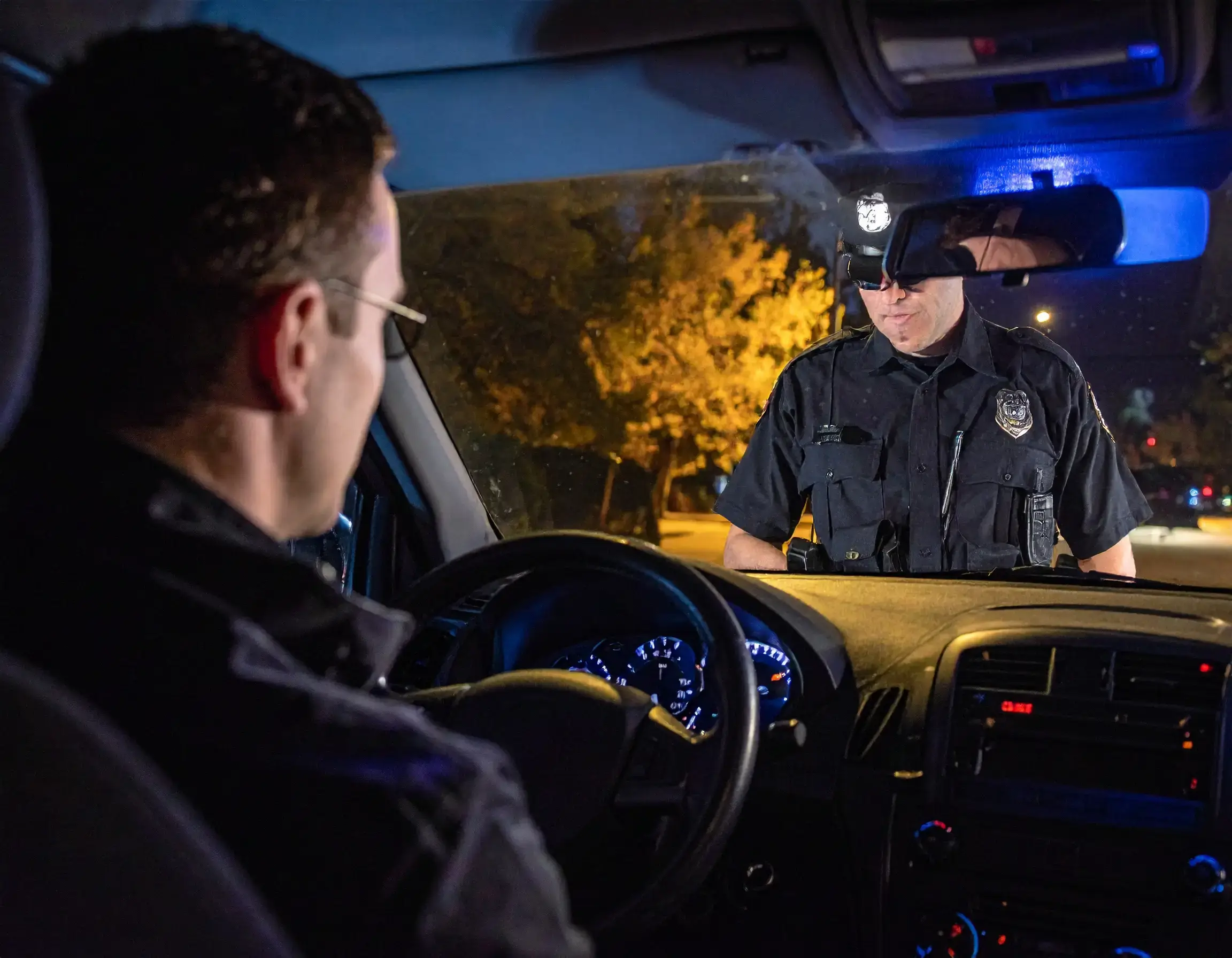
Police may begin an impaired-driving investigation after a traffic stop, a RIDE program stop, a collision, a driving complaint, or observations made while dealing with a driver. Individualized suspicion of DUI is not required for every lawful vehicle stop in Ontario.
In other words, the reason for the initial stop and the reason for an impaired-driving investigation can be different. A driver might first be stopped at a checkpoint or for a Highway Traffic Act issue, and only then an officer may notice facts that lead to questions or screening.
Common observations that can cause police concern include:
- weaving, drifting, unexplained braking, striking a curb, or a near collision;
- driving unusually slowly or failing to respond appropriately to traffic conditions;
- a collision, an anonymous report, or a report from another officer;
- an odour of alcohol or cannabis, an admission of recent consumption, or drug paraphernalia in plain view;
- speech, balance, coordination, attention, or behaviour that appears unusual in the circumstances; and
- information obtained during a lawful interaction, such as a RIDE check.
None of those observations automatically proves impairment. For example, a person with allergies may have red eyes, a person with an injury may be unsteady, and a distracted driver may make a traffic error without being impaired. The question is whether the full information available to police supports the step they take next.
Consider someone stopped at a RIDE check at 11:30 p.m. They may have been driving properly and may not have done anything to attract attention. The officer can still conduct the checkpoint interaction; if the officer notices an odour of alcohol or uses mandatory alcohol screening, the encounter can develop into a more focused investigation. That progression is not itself proof that the person was impaired.
Reasonable suspicion and reasonable grounds are different
“Reasonable grounds to suspect” is commonly called reasonable suspicion, while an arrest for an impaired-driving offence generally requires the higher standard of reasonable grounds to believe. Canadian law uses the reasonable-grounds framework, not the American phrase “probable cause.”
Reasonable suspicion is more than a hunch. It requires objectively identifiable information that can reasonably support a possibility relevant to the investigative step. The exact legal requirement depends on what police are doing, such as making a demand for a roadside test, seeking a drug evaluation, or arresting a person.
Reasonable grounds to believe is a higher threshold. In plain English, police must have stronger, credible information that supports a belief an offence has been committed before making an arrest. The information can come from several sources, including driving observations, admissions, screening results, physical signs, witness information, or the circumstances of a collision.
For example, a single missed turn might lead to a traffic stop but may say very little about impairment. If, during the interaction, the officer also records an admission of drinking, an odour of alcohol, and a roadside screening result, the officer may say those combined facts created grounds for an arrest. Whether the legal standards were met is assessed from the actual chronology, notes, recordings, and disclosure, not from one label on a police form.

Roadside screening: how Ontario police test for alcohol and drugs
Ontario police can use different roadside tools for alcohol and drugs, and those tools do not all answer the same question. A roadside result may inform the next police step, while evidentiary testing after arrest is a separate part of the process.
An Approved Screening Device (ASD) is a handheld breath device used at the roadside. Under section 320.27(2) of the Criminal Code, an officer may make an ASD demand in specified circumstances, including mandatory alcohol screening after a lawful stop. That means police do not always need individualized signs of alcohol consumption before requesting a roadside breath sample from a lawfully stopped driver.
A Standardized Field Sobriety Test (SFST) is a set of physical and attention-based exercises administered according to a standardized procedure. It may be used where police are investigating possible alcohol or drug impairment. It is not interchangeable with a breath sample, and physical limitations, footwear, surface conditions, fatigue, anxiety, or medical issues can be relevant context.
Oral-fluid drug screening involves a saliva sample tested by an approved device for certain drugs. It is not a general test for every substance or a standalone finding of impairment. A positive or negative result may affect the direction of an investigation, but police may also consider other evidence.
If police continue the investigation after roadside screening, they may make further demands. Depending on the allegation, this can include breath testing on an Approved Instrument at a police facility, blood testing in legally authorized circumstances, or an evaluation by a Drug Recognition Expert (DRE). A station Approved Instrument is designed to produce evidentiary breath-test results; it is different from the roadside ASD.
For example, a driver who provides a roadside breath sample may be arrested and taken for Approved Instrument testing if the officer says the roadside result and other facts justify that next step. The roadside screen does not replace the later evidentiary process, and the eventual court issue is not decided solely by what happened beside the vehicle.
Failure or refusal to comply with a lawful demand can itself be alleged as an offence under section 320.15 of the Criminal Code. The legal validity of a demand and whether a person had a reasonable excuse are fact-specific questions; a roadside request to do an SFST should not simply be treated as identical to every Criminal Code demand.
A charge involving driving at or over 80/0.08 concerns a different alleged route to liability than impairment-based driving. Similarly, the legal consequences facing a driver who refuses to take a breathalyzer test will be determined by the demand, the response, and the surrounding facts, not by a general internet rule.
What a DUI stop and DUI arrest usually look like
A DUI stop usually begins with police stopping a vehicle and assessing whether further investigation is needed. A DUI arrest means police say they have grounds to take someone into custody; it does not establish guilt.
Although every case is different, the sequence often looks like this:
- Police stop the vehicle, speak with the driver, and request identification and other required documents.
- The officer observes the driver and the circumstances, and may ask questions about recent alcohol or drug use.
- Police may use an ASD, SFST, oral-fluid screening, or another investigative step where legally authorized.
- If the officer says grounds have developed, the driver may be arrested and advised of the reason.
- Police may transport the person for further testing or evaluation and, where applicable, give information about the right to counsel.
- The person may later be released with court documents, release conditions, and notice of provincial driving consequences.
The timing can range from a brief roadside interaction to several hours in custody, particularly if there is transport, testing, booking, or a wait for release. A collision, an injury, a drug investigation, or multiple allegations can make the process longer.
For example, consider someone charged after leaving a restaurant at 10:00 p.m. Police stop the car after a report of lane drifting, conduct a roadside interaction, and arrest the driver after screening. The person may be brought to a station for further testing, released later that night or the next day depending on the circumstances, and receive a first court date weeks later. The charge must still be proven through the court process.
If you have been arrested for suspicion of dui, focus first on your release documents, any driving-prohibition paperwork, and the deadlines or dates written on them. Do not assume an arrest tells you which evidence the prosecution can ultimately rely on.
Your rights and practical choices during the stop
During an impaired-driving stop, stay calm, provide required identification, and follow lawful safety directions. Do not volunteer explanations or try to debate the investigation at the roadside, and clearly ask to speak with counsel if you are detained or arrested.
The Canadian Charter of Rights and Freedoms protects the right to retain and instruct counsel without delay under section 10(b). In impaired-driving investigations, however, the timing of access to counsel can interact with urgent investigative steps and lawful testing demands. Do not rely on online advice to delay, ignore, or decide whether to comply with a demand.
A practical approach is to:
- keep your hands visible and avoid sudden movements;
- provide your licence and other documents when required;
- be respectful and avoid arguing about the facts at roadside;
- avoid volunteering estimates about what, when, or how much you consumed;
- listen carefully to the words of any demand and ask for clarification if you genuinely do not understand it;
- state clearly that you want to speak with a lawyer when you are detained or arrested; and
- read and keep every document given to you on release.
This is not a suggestion to be uncooperative. It is a reminder that there is a difference between complying with lawful directions and supplying unnecessary explanations that may later be treated as admissions. Whether a particular demand was valid or a particular response was legally sufficient requires a review of the actual facts.
What to do after you are released
After release, preserve the details while your memory is fresh and get legal advice before discussing the incident widely. The first days are often important because documents, receipts, digital records, and witnesses can become harder to locate over time.
As soon as you can, make a private, dated record of:
- where you were driving, why you were stopped, and the time of each major event;
- what officers said, including the wording of any demand or caution you recall;
- what tests were requested, attempted, or completed and what you were told about them;
- anything you consumed, relevant food, medication, health conditions, injuries, or sleep issues;
- names and contact information for passengers or witnesses;
- receipts, ride records, restaurant bills, messages, photos, location history, and any available video; and
- all release papers, notices, towing or impound documents, and licence-related paperwork.
Do not alter records, contact witnesses to coordinate accounts, or post about the event on social media. Keep originals and copies. If there is vehicle video, business surveillance, or a witness whose evidence may matter, tell counsel promptly so the issue can be assessed.
Ontario’s Administrative Driver’s Licence Suspension (ADLS) system can create provincial driving consequences before the criminal allegation is decided. The applicable consequences depend on the allegation, the type of result or refusal alleged, the driver’s history, and current provincial rules, so review the paperwork rather than relying on a remembered standard penalty.
A lawyer reviews the full chronology, police grounds, wording and timing of demands, Charter issues, testing records, disclosure, and the Crown Attorney’s case. No single fact, such as an arrest, an officer’s opinion, or a roadside result, reliably predicts the outcome.

FAQ about suspicion of DUI
Does suspicion of DUI mean a charge?
No. Suspicion of DUI means police have a concern to investigate; a charge exists only if an offence is formally alleged. You may be stopped and released without a charge, but you should still read any licence or vehicle paperwork carefully because provincial consequences can arise outside the criminal court process.
What does alleged DUI mean?
Alleged DUI means someone is accused of impaired driving or a related offence, not that the accusation has been proven. In court, the prosecution must prove the specific charge according to the applicable criminal standard.
What is a DUI suspect?
A DUI suspect is a person police suspect may have driven while impaired or committed a related offence. It is an investigative label, not a finding of guilt and not necessarily an indication that charges will follow.
What does DUI investigation mean?
A DUI investigation is the process police use to assess possible impairment, which can include observations, questions, roadside screening, further testing, and review of the driving circumstances. Its scope varies: a RIDE check may end quickly, while an arrest can lead to station testing and later disclosure in a criminal case.
What does DUI mean in Canada?
DUI is common shorthand for driving under the influence, but Canadian charges usually use Criminal Code impaired-operation language. For a broader explanation of driving under the influence Ontario rules, including the terms used in this province, see the linked article.
Is a DUI a criminal charge in Canada?
Impaired operation and some related allegations, including certain over-limit and failure-to-comply allegations, are Criminal Code offences. Whether a person is charged, what exact offence is alleged, and whether it can be proven are separate questions.

Speak with a Toronto criminal defence lawyer
Early advice can help you understand an impaired-driving allegation, preserve relevant information, and respond to court and licence paperwork without guessing about the process.
Call 647-351-HELP (4357) or book a free consultation to discuss your case with Jeffrey I. Reisman.