

 Based on 116 Verified Google Reviews

Criminal trial process in Ontario: the short answer
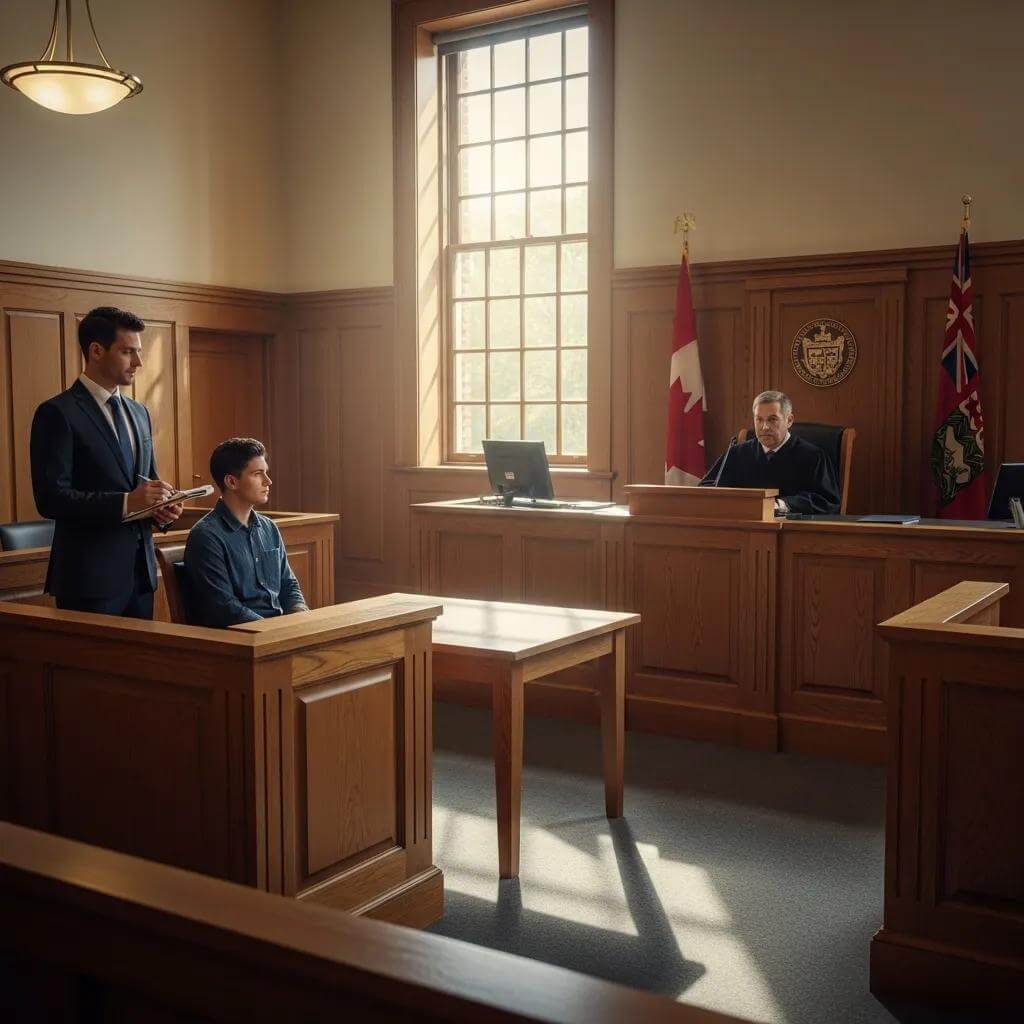
Criminal trial process Ontario cases usually move from an arrest or summons, through release and early court dates, disclosure review and pre-trial discussions, to a guilty plea, withdrawal, trial or another resolution. A criminal case can take many paths before a trial is ever held, and the dates, choices and procedure depend on the charge, the court, the evidence and the disclosure.
After police lay a charge or require someone to attend court, the immediate priorities are release conditions, the first court date and getting legal advice. The case then commonly moves through remand or case-management appearances while the Crown attorney provides disclosure and counsel assesses the evidence. If it does not resolve, it may be scheduled for trial in the Ontario Court of Justice or, for some matters, the Superior Court of Justice.
This overview focuses on the court process in Ontario. For a broader look at criminal trial process steps Canada, it can also help to understand the difference between the police investigation, the court case and the trial itself.
Your rights when police arrest or detain you
If police arrest or detain you, they must tell you why and advise you of your right to retain and instruct counsel without delay. Section 10 of the Canadian Charter of Rights and Freedoms protects those rights, while section 11(d) protects the presumption of innocence and the right to a fair and public hearing by an independent and impartial tribunal.
In practical terms, ask to speak privately with a lawyer as soon as possible. You generally have the right to remain silent: you do not have to answer questions about the allegation, make a written statement or try to explain your side while waiting for legal advice. Be respectful, provide identifying information when legally required, and do not resist police.
Police should give a person an opportunity to contact counsel, but the exact circumstances can matter. If you are unsure about know your rights issues in your case, write down what happened, including the time, place, officers involved and words used, as soon as you can safely do so.
Release, bail and your first court date
Police may release a person with a promise to appear and conditions, or the person may be held for a bail hearing. A first court appearance is usually an administrative appearance to address the status of the file, not a trial and not normally the time to argue all the evidence.
Release conditions can restrict contact with named people, attendance at places, possession of weapons, travel or communication. Read every condition carefully. A breach allegation can create a new criminal charge and can affect future release decisions, even if the original allegation has not been proven.
Keep every police and court document, calendar the court date, and arrange representation or confirm whether you must attend personally. Someone facing a contested release hearing may need a bail hearing lawyer Toronto to address the legal grounds for detention and a workable release plan.
Do not ask a complainant or protected person to change their account or contact them indirectly through friends or social media if a condition prohibits contact. For practical concerns about release court, see this discussion of bail court representation.
Disclosure, the second appearance and case management court
Disclosure is the material provided by the Crown about the case, such as police notes, witness statements, video, photographs, recordings and forensic material. A second court appearance in Ontario often concerns whether counsel has been retained, whether disclosure has arrived, and what step is needed next.
Later dates may be called remand court or case management court. They are used to move the file forward, obtain disclosure, set a Crown pre-trial, schedule a judicial pre-trial or arrange another appearance. “To be spoken to” commonly means that a party is asking to address the court about the file rather than simply setting a routine adjournment.
Bring your appearance notice, bail paperwork and a list of questions. Counsel will commonly update the court about disclosure, outstanding issues, estimated hearing time and the next proposed step. Do not make a rushed decision about a plea before disclosure has been reviewed and you understand the evidence and consequences.
For example, consider someone charged with assault after a dispute outside a bar. A police summary may initially make the case sound straightforward, but video footage, witness statements and medical records disclosed later may affect whether identity, self-defence, credibility or another issue needs to be investigated. 
What happens at a Crown pre-trial or judicial pre-trial in Ontario?
A Crown pre-trial and a judicial pre-trial are discussions held before trial to identify issues, explore resolution and prepare the case; they do not decide guilt or innocence. They are opportunities to make the next court step more focused, not a substitute for a trial where evidence is tested.
A Crown pre-trial is generally a discussion between Crown counsel and defence counsel. They may discuss the allegation, disclosure gaps, possible resolutions, sentencing positions, legal issues, witness needs and a realistic trial estimate.
A judicial pre-trial involves a judge and is generally confidential, subject to important limits. It can address trial readiness, the issues genuinely in dispute, applications, evidentiary concerns and scheduling. The judge who conducts it will generally not preside at the trial if substantive matters have been discussed.
Before a pre-trial, ask counsel what the Crown must prove, what disclosure remains outstanding, what resolutions are being discussed, and what happens if the matter is set for trial. A useful reference for unfamiliar court language is this guide to legal terminology Canada.
Plea, sentence or trial: how a case can resolve
A case may resolve before trial through a guilty plea and sentence, a withdrawal or another lawful resolution; if the allegation is contested, the case may move toward trial scheduling. A guilty plea is a serious decision because it admits the offence and can lead to a criminal record and other consequences.
Before accepting a plea, a court must be satisfied that it is voluntary, informed and supported by facts that establish the offence. Legal advice should address the evidence, available defences, the likely sentencing range, immigration or employment consequences where relevant, and any ancillary orders.
For example, a person charged with impaired driving may need to understand not only a proposed sentence but also the driving prohibition and the consequences of a conviction before deciding how to proceed. The Crown must prove the charge beyond a reasonable doubt at trial; the accused does not have to prove innocence.
The steps in an Ontario criminal trial
An Ontario criminal trial normally proceeds through legal issues, opening submissions, Crown evidence, cross-examination, any defence evidence, closing submissions, a decision process and a verdict. The Crown bears the burden of proof, and an accused person has the right not to testify.
- Preliminary legal issues: The judge may decide disclosure disputes, admissibility questions, Charter applications or other procedural matters.
- Openings: The Crown outlines its case, and the defence may make an opening statement or wait until later.
- Crown evidence: Crown witnesses testify and may be cross-examined by the defence. Documents, recordings and other exhibits may be introduced.
- Defence case: The defence may call evidence, but is not required to do so. The accused alone decides whether to testify after receiving legal advice.
- Closing submissions: Each side explains how the evidence and law should be applied.
- Instructions and decision: In a jury case, the judge instructs the jury on the law. In a judge-alone case, the judge decides the facts and law.
- Verdict: The court finds the accused guilty or not guilty of each charge, subject to any available included offences.
On a trial day, arrive early, dress respectfully, turn off your phone and speak only when counsel tells you to do so. Your lawyer may need your help locating records or responding to a factual point, but witnesses must not be coached or contacted improperly. For more on a trial in the court, it is important to distinguish a trial from shorter hearings that decide a particular issue.
Judge-alone and jury trials
The available mode of trial depends on the offence and procedural choices available under the Criminal Code of Canada. In a judge-alone trial, the judge decides the facts and applies the law; in a jury trial, jurors decide the facts while the judge instructs them on the law.
A criminal jury verdict must be unanimous. Neither mode is automatically preferable: counsel considers the evidence, legal issues, practical trial length and the available election before advising on the choice.
Verdict, sentencing and what happens afterward
A not-guilty verdict ends the prosecution on that charge, while a guilty verdict moves the case to sentencing unless sentence is addressed immediately. Sentencing may occur on another date so the court can receive submissions, victim impact material where applicable, a pre-sentence report or other relevant information.
Possible sentencing outcomes vary widely with the offence, the facts, an offender’s circumstances, prior record and the legal principles of sentencing. An appeal is not simply a second trial because a party dislikes the result. It asks an appeal court to review alleged legal, factual or procedural error; criminal appeals in Ontario may go to the Court of Appeal for Ontario.
How long does it take to go to trial in Ontario?
How long it takes to go to trial in Ontario is different from how many days the trial itself lasts. The total time from charge to resolution can depend on disclosure volume, court availability, witness availability, expert evidence, legal applications, co-accused, trial estimates and whether the case is in the Ontario Court of Justice or Superior Court of Justice.
Section 11(b) of the Charter protects the right to be tried within a reasonable time. The Supreme Court of Canada’s decision in R. v. Jordan sets the framework courts use to assess alleged delay, but delay analysis is fact-specific and should be discussed with counsel promptly rather than raised casually at the end of a case.
While waiting, comply with release conditions, keep counsel updated about new documents or witnesses, and attend every required date. 
How long does a criminal trial last?
How long a criminal trial takes depends on the number of witnesses, the volume of exhibits, legal applications, cross-examination and whether it is judge-alone or jury. A short trial may involve one or two witnesses, while a case involving digital evidence, experts or multiple complainants can require substantially more court time.
Counsel can provide a more useful estimate after reviewing disclosure and identifying the live issues. For an example of timing questions that arise in driving cases, read criminal trials in Canada.
FAQ about Ontario criminal court appearances and trials
What happens at a pre-trial in Ontario?
A pre-trial is a planning and resolution discussion before trial, not a hearing that decides whether you are guilty. The participants identify issues, discuss disclosure and scheduling, and may explore whether the case can resolve.
What is a second court appearance in Ontario?
A second appearance is commonly a follow-up administrative date to confirm counsel, disclosure and the next step. It is not necessarily a plea date or trial date.
What is case management court in Ontario?
Case management court is a court appearance used to organize the file and move it toward the appropriate next step. The exact local process and name can vary by courthouse.
What does “to be spoken to” mean?
“To be spoken to” generally means the matter needs to be brought before the court for discussion or direction. It may concern disclosure, an adjournment, a pre-trial date, release conditions or another procedural issue.
What happens when a case goes to trial?
The Crown presents evidence and must prove guilt beyond a reasonable doubt. The defence can cross-examine witnesses, challenge evidence, make legal submissions and may call evidence, but the accused need not testify.
Do all jurors have to agree?
Yes. A criminal jury must reach a unanimous verdict.
What is the right to a fair trial?
The right to a fair trial includes the presumption of innocence, an impartial decision-maker, a meaningful opportunity to answer the case, and a trial within a reasonable time. What that requires in a particular case depends on the facts and procedure.
What to do now if you have an Ontario criminal court date
If you have a court date, act early and stay organized. A criminal lawyer Toronto can review the allegation, release terms and immediate deadlines with you.
- Preserve your appearance notice, release papers, disclosure and any messages, videos or records that may matter.
- Follow every release condition exactly, including no-contact, distance, residence and reporting terms.
- Do not contact a protected person directly or indirectly where a condition prohibits it.
- Record questions, court dates, deadlines and the names of possible witnesses for counsel.
- Seek legal advice promptly rather than discussing the facts with police, the complainant or social media.
- If private counsel is not available, explore Legal Aid Ontario eligibility and ask about duty counsel at court.
Speak with a Toronto criminal defence lawyer
Early advice can help you understand your release conditions, preserve relevant information and prepare for the next stage of the Ontario criminal court process.
Call 647-351-HELP (4357) or book a free consultation to discuss your case with Jeffrey I. Reisman.