

 Based on 116 Verified Google Reviews
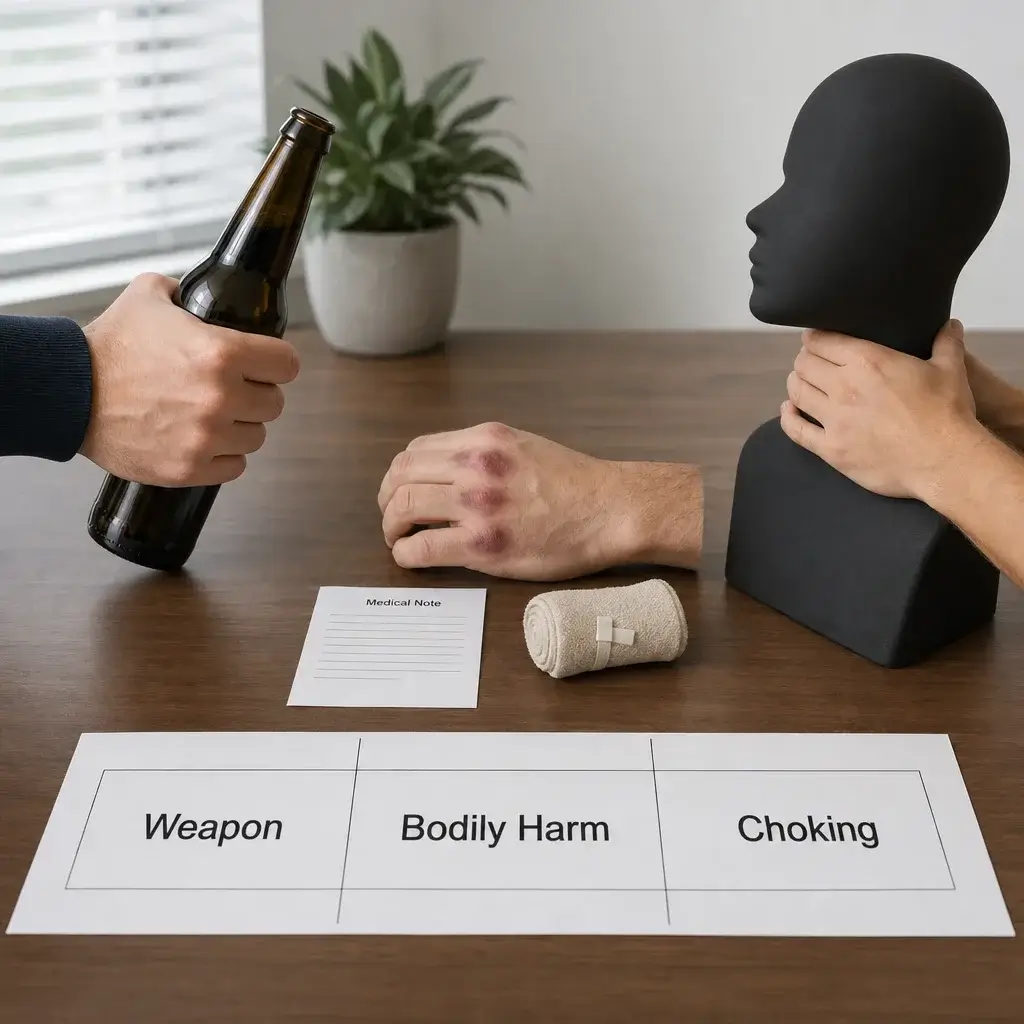
Most people search the assault with a weapon criminal code of canada after a charge and assume it means one single offence. It does not. Section 267 creates three related forms of assault: assault with a weapon or imitation weapon, assault causing bodily harm, and assault by choking, suffocating, or strangling. This page is general information, not legal advice for your specific case.
What section 267 means in plain English
Section 267 covers an assault that becomes more serious because of a weapon, an injury, or choking conduct. The current section says, in substance, that everyone who, in committing an assault, carries, uses or threatens to use a weapon or an imitation thereof; or causes bodily harm to the complainant; or chokes, suffocates or strangles the complainant, is guilty of an indictable offence and liable to imprisonment for a term of not more than 10 years, or of an offence punishable on summary conviction.
Section 267 sits between simple assault and aggravated assault in the usual hierarchy. Section 265 contains the core definition of assault. Section 266 is the basic offence of assault. Section 267 adds weapon use, bodily harm, or choking. Section 268 covers aggravated assault, which involves wounding, maiming, disfiguring, or endangering life.
Readers often confuse criminal code of canada assault with a weapon with simple assault under section 266. The difference is not just that police used stronger words. The Crown must prove the extra feature in section 267, not just unwanted force or a threat of immediate force.
Section 267(a) vs 267(b) vs 267(c): side-by-side comparison
The three branches of section 267 are different offences on paper, even if they can arise from the same event. A charge may allege Criminal Code 267(a), Section 267 b Criminal Code of Canada, or Section 267(c) Criminal Code of Canada, and sometimes the facts could support more than one theory.
| Subsection | What makes it different | Is injury required? | Common evidence | Common example |
|---|---|---|---|---|
| 267(a) | Carrying, using, or threatening to use a weapon or imitation weapon while committing an assault | No | Witness accounts, texts, 911 call, seized object, video | Swinging a bottle, brandishing a knife, threatening with a bat |
| 267(b) | Causing bodily harm during the assault | Yes, bodily harm must be proved | Photos, medical records, pain evidence, witness accounts | Punch causing concussion symptoms or a cut needing treatment |
| 267(c) | Choking, suffocating, or strangling during the assault | No separate bodily-harm proof is required by the wording | Neck photos, breathing complaints, witness evidence, admissions | Hands around the neck interfering with breathing |
How section 267 relates to sections 265, 266, and 268
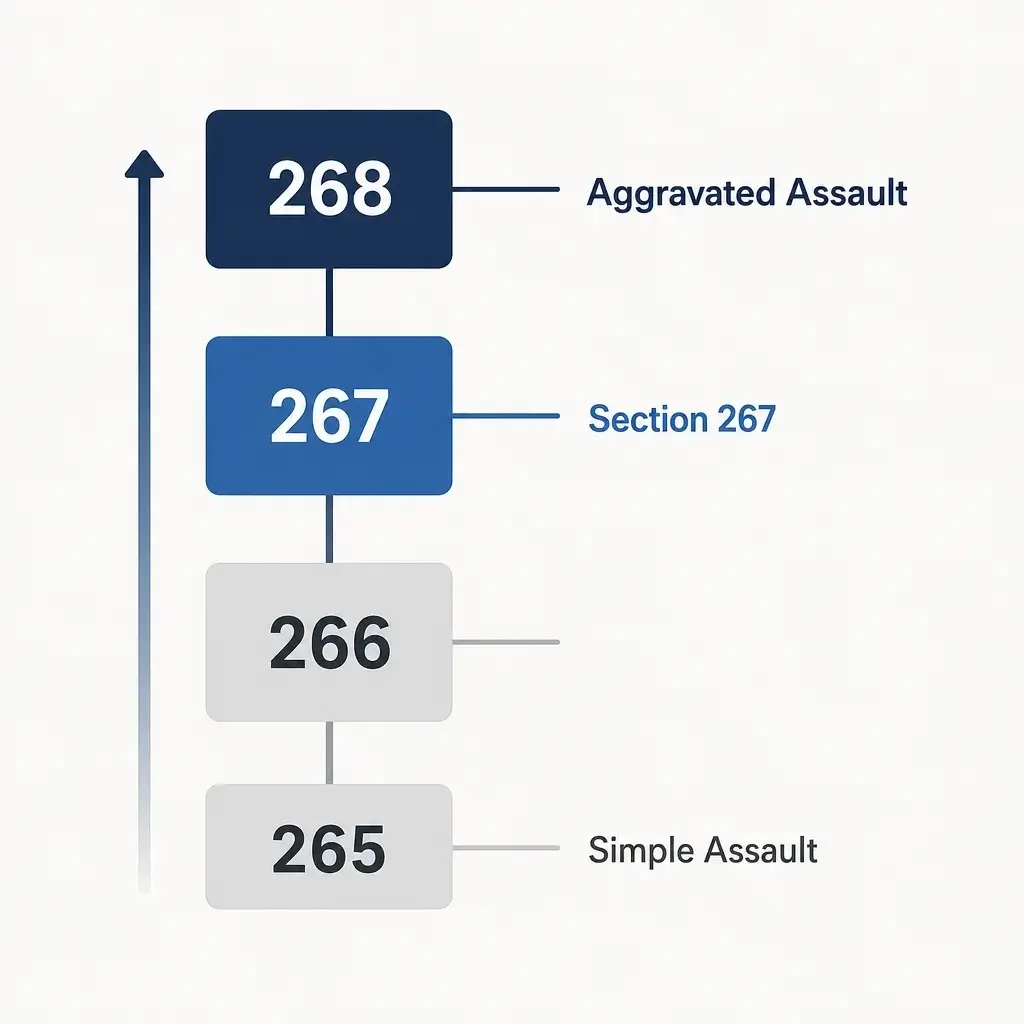
Section 265 defines assault in Canada. In plain English, assault can include applying force intentionally without consent, attempting or threatening to apply force by an act or gesture if the other person has reasonable grounds to believe you can carry it out, and some accosting or impeding situations while openly carrying a weapon.
Section 266 is usually what people mean by simple assault. It is the lowest common assault charge in the sense that it does not require bodily harm, a weapon, or life-endangering injury. That does not make it minor in every case. A conviction can still produce a criminal record, probation, and sometimes jail.
Section 268, the Aggravated assault Criminal Code provision, is more serious than section 267. It applies where the complainant is wounded, maimed, disfigured, or their life is endangered. The legal jump from section 267 to section 268 matters because the injury threshold and sentencing exposure are higher.
| Section | Label used in practice | Extra feature Crown must prove | Relative seriousness |
|---|---|---|---|
| 266 | Simple assault | Basic assault only | Lowest of these common assault categories |
| 267(a) | Assault with a weapon | Weapon or imitation weapon used, carried, or threatened during assault | More serious than 266 |
| 267(b) | Assault causing bodily harm | Bodily harm caused by the assault | More serious than 266 |
| 267(c) | Choking, suffocating, or strangling | Choking-type conduct during assault | Treated seriously, especially in intimate-partner cases |
| 268 | Aggravated assault | Wounding, maiming, disfiguring, or endangering life | More serious than 267 |
Legal definition of assault with a weapon in Canada
Assault with a weapon under the Criminal Code of Canada still requires proof of an underlying assault. The weapon feature does not replace the assault. The Crown must still prove intentional non-consensual force, or an attempt or threat amounting to assault under section 265, plus the weapon-related conduct in section 267(a).
Physical injury is not required for a 267(a) charge. A person can face assault with a weapon even where no one was cut, bruised, or medically treated, as long as the Crown says a weapon or imitation weapon was carried, used, or threatened in committing the assault.
Physical contact is not always required either. If the allegation is that someone threatened immediate force with an object in a way that made the complainant reasonably believe the force could be carried out, the Crown may try to prove assault without an actual blow landing. Whether the facts meet that test depends on the exact words, gestures, distance, and circumstances.
Carrying, using, and threatening to use are not the same thing. Using means the object was actively employed in the assault. Threatening to use means it was used to create immediate fear of force. Carrying means the object was borne in the course of the assault, but there still has to be a real connection to the assault itself, not mere unrelated possession.
What counts as a weapon or imitation weapon?
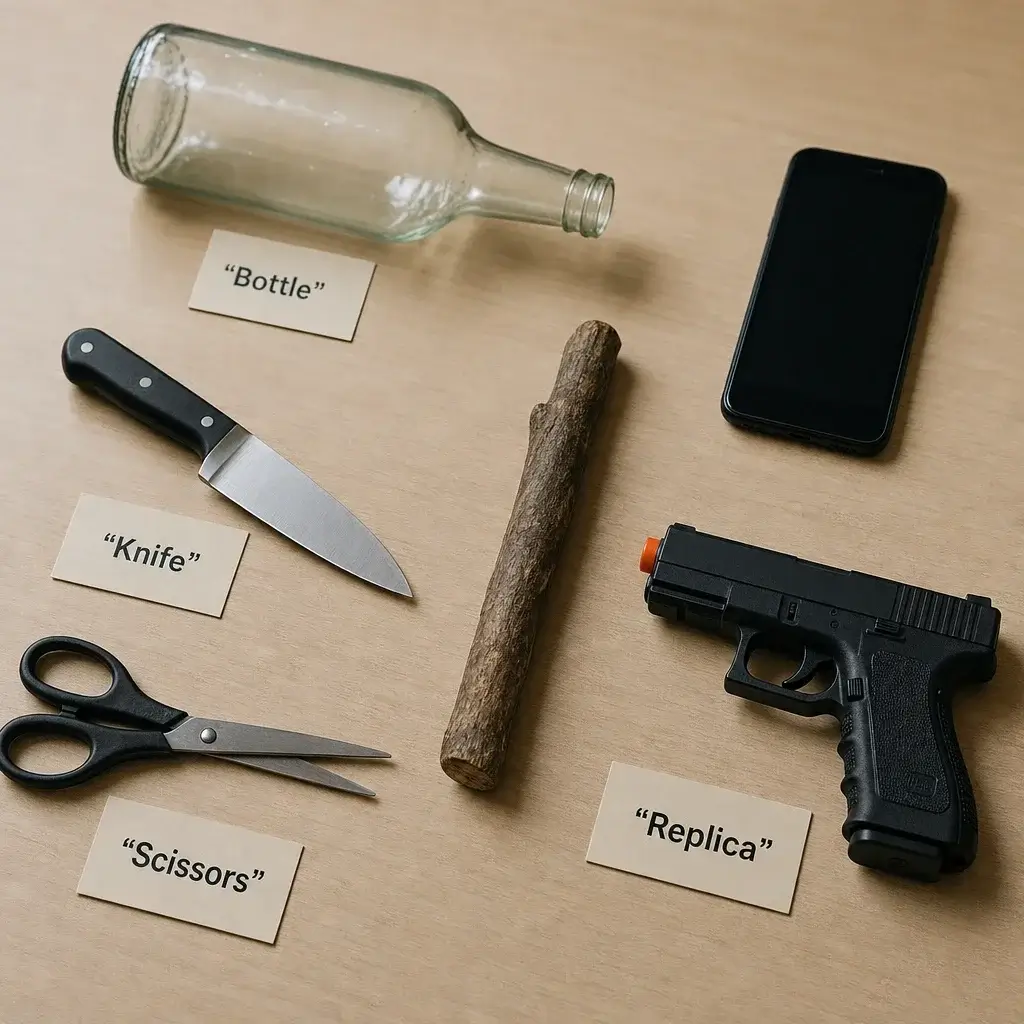
A weapon does not have to be made as a weapon. Under the Criminal Code, an ordinary object can count as a weapon if it is used, designed to be used, or intended to be used to cause death, injury, or to threaten or intimidate a person.
Household objects can count as weapons. Courts and police may treat a bottle, chair, stick, kitchen knife, scissors, tool, bat, hot liquid, cell phone, or vehicle as a weapon depending on how it was used or threatened. Context matters more than the label on the object.
Imitation weapons matter because section 267(a) expressly includes an imitation thereof. A fake gun, replica firearm, or other object presented as a weapon may support the charge if the Crown can still prove the underlying assault and the threatening use of the imitation object.
Domestic cases often involve common objects rather than classic weapons. We see allegations built around a phone thrown at someone, a mug used to strike, a kitchen utensil brandished during an argument, or an object raised in a way the complainant says created fear of immediate force. The legal issue is usually the manner of use, the threat, and the surrounding evidence.
Legal definition of assault causing bodily harm
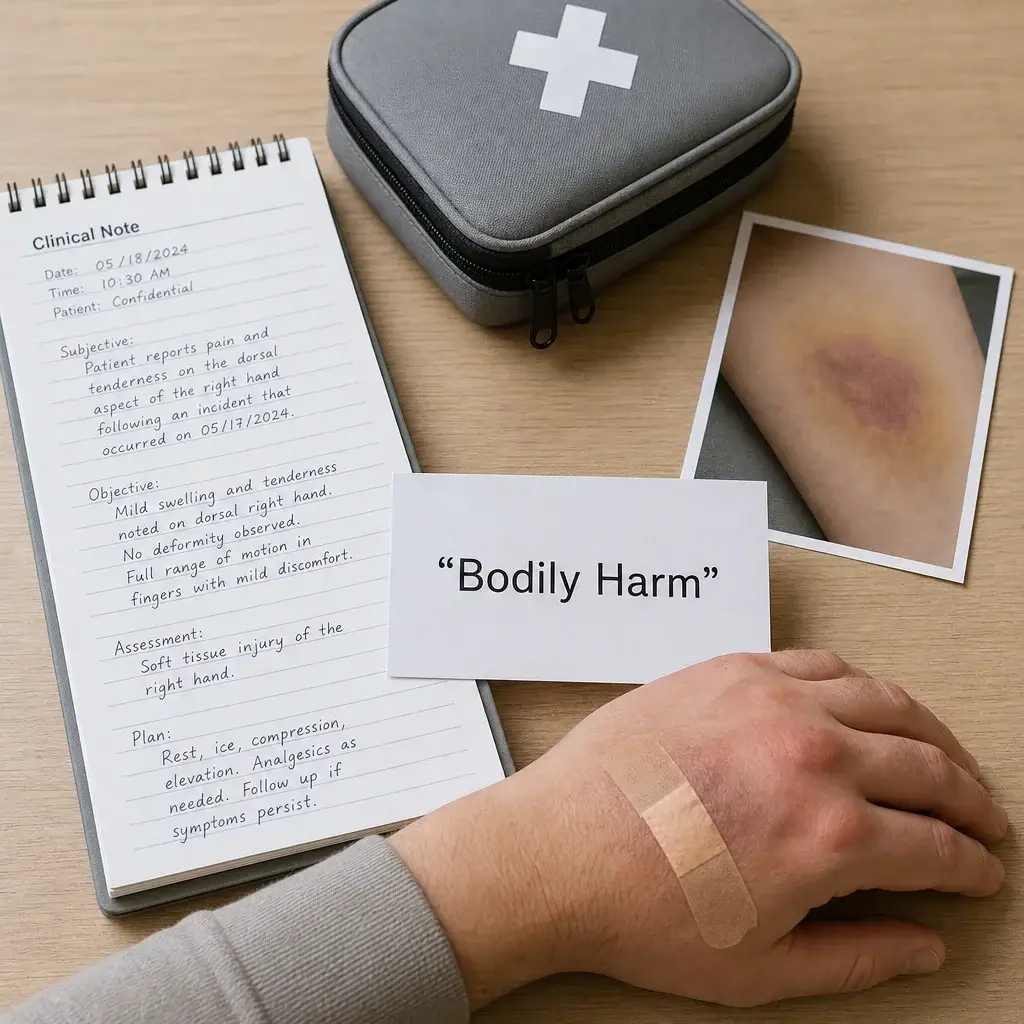
Assault causing bodily harm in Canada means an assault that causes bodily harm to the complainant. The assault causing bodily harm Criminal Code branch is section 267(b), and the Crown must prove both the assault and the resulting bodily harm.
Bodily harm is defined in section 2 of the Criminal Code as any hurt or injury to a person that interferes with the health or comfort of the person and is more than merely transient or trifling. That definition is the starting point in every assault causing bodily harm canada criminal code case.
The law does not require a broken bone or a hospital admission. Bruising, swelling, cuts, concussion symptoms, sprains, breathing impairment, or pain that meaningfully interferes with health or comfort can be enough, depending on the evidence. Minor, fleeting discomfort may not be enough.
Online searches sometimes use the phrase actual bodily harm. That is not the usual Criminal Code label in Canada. The Canadian charge is assault causing bodily harm, and the legal threshold comes from the bodily-harm definition in section 2.
What injuries count as bodily harm?
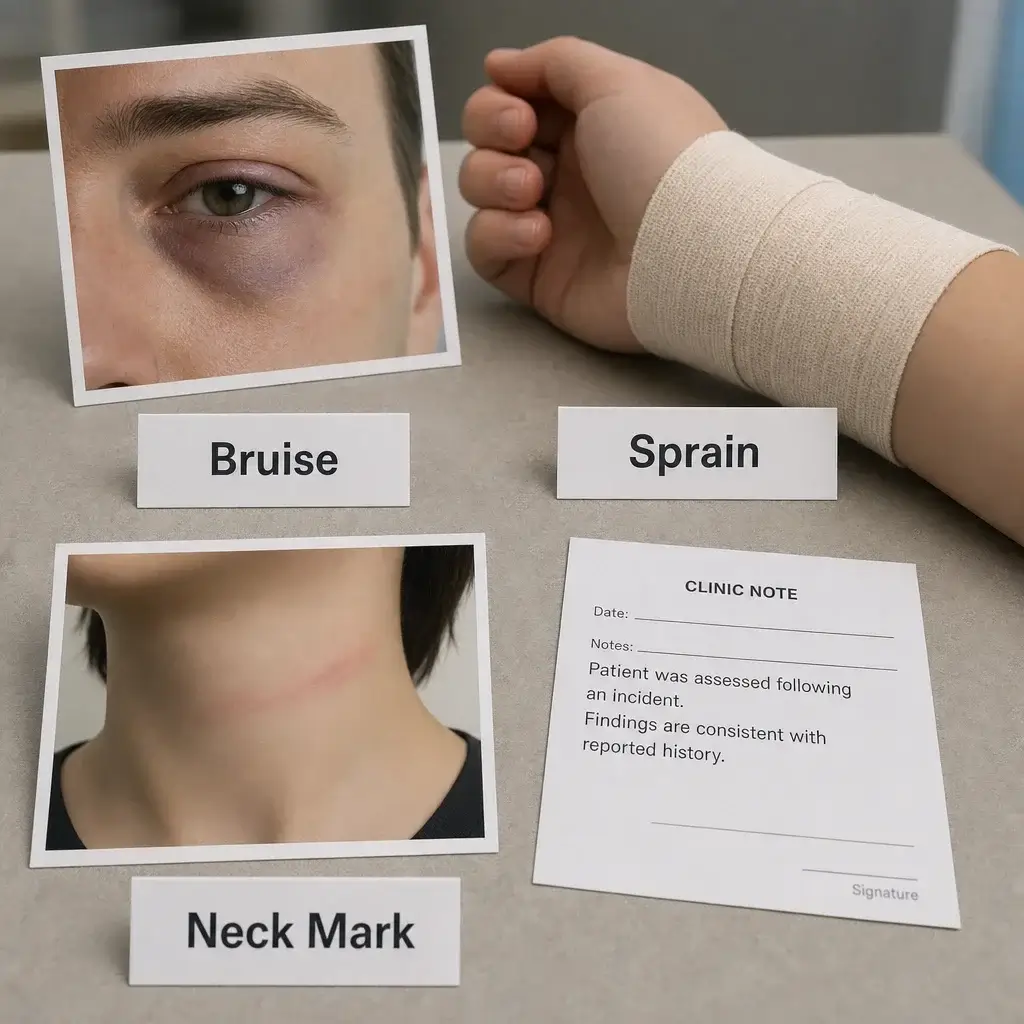
There is no closed list of injuries that automatically qualify. The question is whether the injury interfered with health or comfort and was more than merely transient or trifling.
Assault causing bodily harm examples can include a black eye with lingering pain, cuts that need stitches, a sprain that limits movement, concussion symptoms, temporary loss of consciousness, or neck pressure that affects breathing. These are examples, not guaranteed results in any one case.
Redness or soreness can be argued either way. If the evidence shows the effect was brief and slight, the defence may say the bodily-harm threshold is not met. If the evidence shows meaningful pain, functional limits, or continuing symptoms, the Crown may argue section 267(b) applies.
Visible injury helps the Crown, but it is not the whole case. Bodily harm can sometimes be proved through testimony, medical notes, pain complaints, and evidence about limited movement or reduced comfort, even where photos are weak or absent.
Causation: what the Crown must prove about the injury
The Crown must prove the assault caused the bodily harm in the legal sense. It is not enough to show an argument happened and an injury existed sometime later. The prosecution has to connect the injury to the assault beyond a reasonable doubt.
Canadian criminal law generally asks whether the accused’s conduct was a contributing cause of the injury that was not trivial or insignificant. If the injury came from another event, a pre-existing condition, a later fall, or some separate struggle, causation may be a real issue.
Causation fights are common where symptoms appeared later. A complainant may say neck pain started the next morning, or dizziness developed after the incident. The defence may examine timing, prior injuries, alcohol or drug use, intervening events, and whether the medical evidence really ties the symptoms to the assault.
Elements checklist: what the Crown must prove for each type of section 267 charge
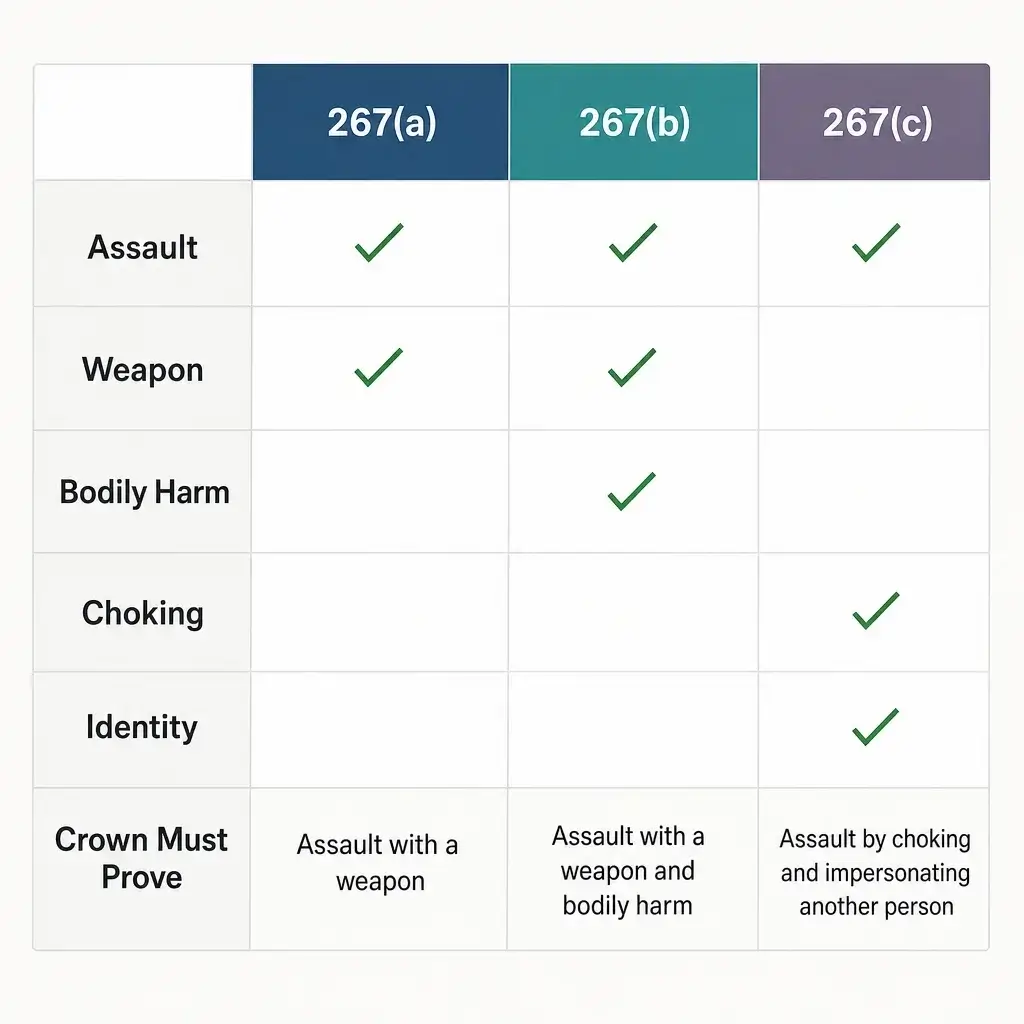
The Crown must prove every essential element beyond a reasonable doubt. That is the criminal standard in Canada, and it applies to identity, the assault itself, and the extra feature under section 267.
For Criminal Code 267(a), the Crown must prove: an assault under section 265; the accused was the person who committed it; and, in committing that assault, the accused carried, used, or threatened to use a weapon or imitation weapon. The mental element is usually treated as the intent for the underlying assault, together with the intentional conduct involving the object.
For section 267(b), the Crown must prove: an assault under section 265; identity; bodily harm as legally defined; and that the assault caused that bodily harm. The injury does not have to be intended in a specific way, but the assault itself must be intentional and the bodily harm must be proved as part of the result.
For Section 267(c) Criminal Code of Canada, the Crown must prove: an assault under section 265; identity; and that, in committing the assault, the accused choked, suffocated, or strangled the complainant. Breathing interference, neck pressure, and surrounding evidence often become central even if the physical marks are limited.
Identity is always a separate issue. Even if everyone agrees an assault happened, the Crown still has to prove who did it. In some cases the main defence is not about injury or a weapon at all, but about whether the accused was the person involved.
What evidence is commonly used in assault with a weapon and bodily harm cases?
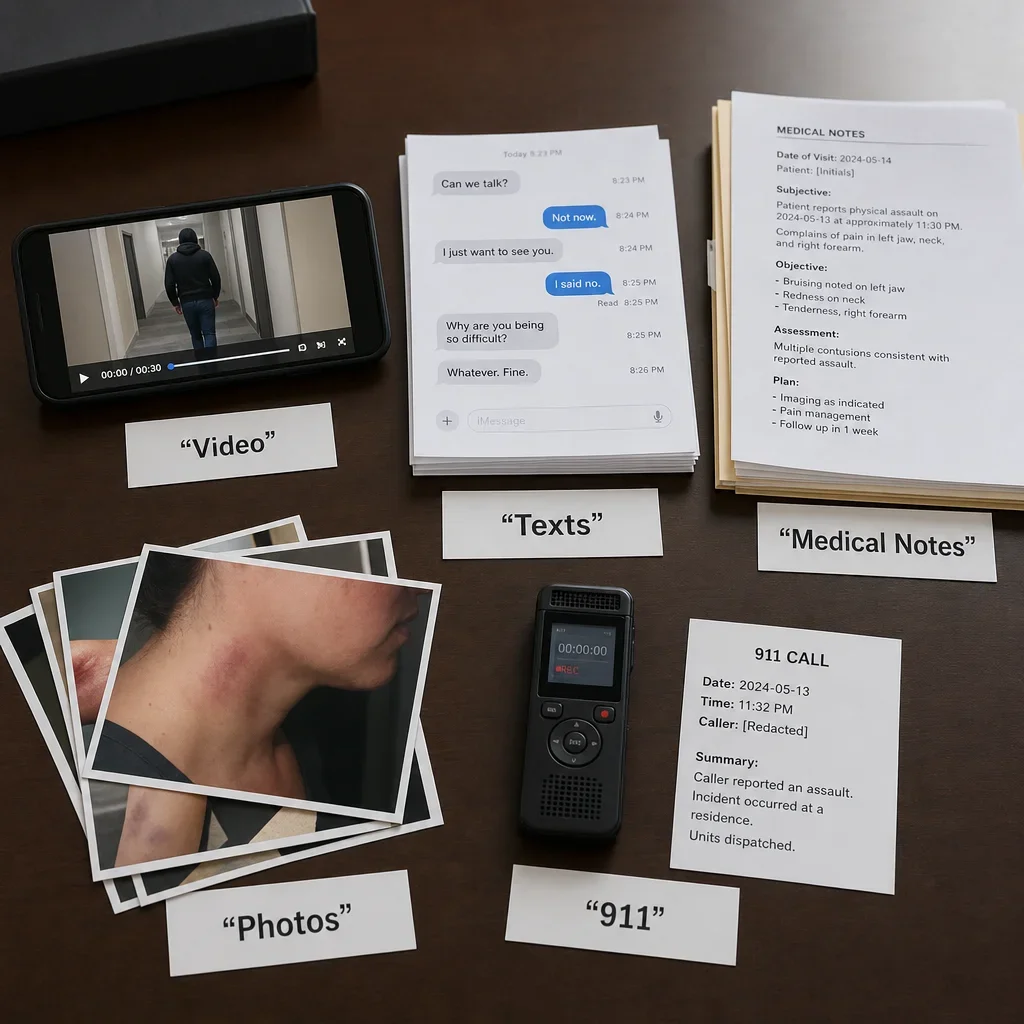
No single piece of evidence is legally required in every assault case. A prosecution may rely on one witness, several witnesses, medical records, photos, 911 audio, surveillance, text messages, social media messages, admissions, body-worn camera footage, or the alleged weapon itself.
Weapon allegations usually turn on what the object was, where it was, and how it was used. Video can help, but many section 267(a) cases come down to conflicting accounts about whether an object was raised, swung, pointed, or merely present in the room.
Bodily-harm allegations often turn on injury evidence. Photos taken the same day, clinic notes, ambulance records, pain complaints, and testimony about missed work, limited movement, or ongoing symptoms can all matter. Lack of medical records does not automatically end the case, but it can weaken proof of the injury threshold or causation.
Self-defence claims are evidence-heavy. Courts look at the whole scene, not just the injury photo. Words exchanged, who started the physical force, the size and position of the people involved, the availability of retreat, and whether an object appeared before or after the struggle can all matter.
Common defences to section 267 charges
The best defence depends on the facts, the disclosure, and the exact charge wording. The label assault causing bodily harm criminal code of canada does not tell you which defence fits.
One defence is that no assault happened at all. If the contact was accidental, consensual within lawful limits, or not intentional, the Crown may fail to prove the underlying assault.
Another defence is that the Crown cannot prove a weapon in law. A household object is not automatically a weapon just because police say it is. The defence may argue the object was not used, not threatened, or not connected closely enough to the assault.
Another defence is that the bodily-harm threshold is not met. The defence may accept there was a struggle but say the injury was merely transient or trifling, or that the symptoms came from something else.
Identity can be a full defence. In crowded scenes, poor lighting, delayed reporting, or emotionally charged domestic incidents, witness reliability can become the central issue.
Charter issues can matter where police statements, searches, or detention were unlawful. Those arguments are fact-specific and turn on the record, not internet templates.
If release conditions forbid contact with the complainant, do not contact them. A breach charge can make the situation worse even before the main case is resolved.
Self-defence under section 34: how courts look at reasonableness
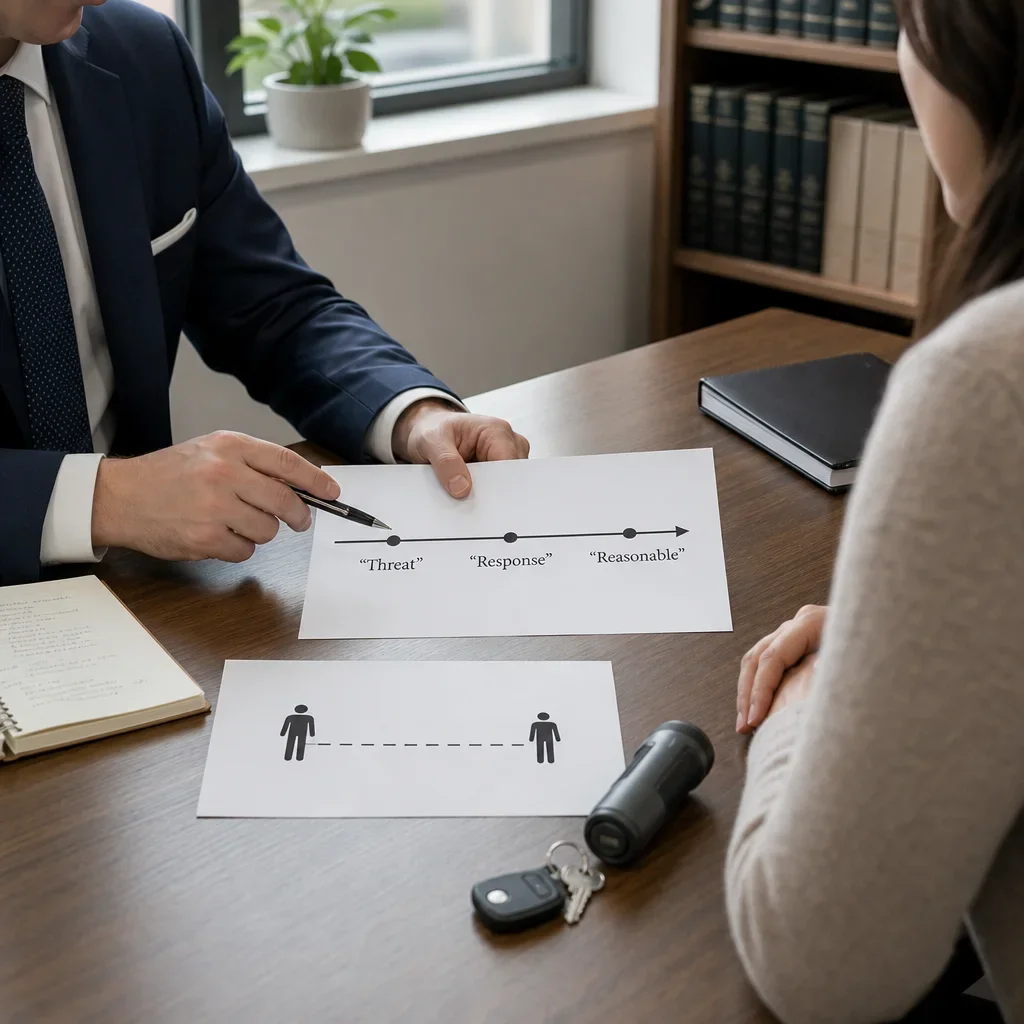
Self-defence under section 34 can apply if a person believes on reasonable grounds that force is being used against them or another person, or that a threat of force is being made, and the act committed is for the purpose of defending or protecting against that force or threat, and the act is reasonable in the circumstances.
Reasonableness is the hard part in most cases. Courts may look at the nature of the threat, whether it was imminent, whether there were other options, the parties’ size, age, gender, and physical capabilities, the history of the relationship, prior threats, the use or presence of weapons, and whether the response was proportionate.
Self-defence is highly fact-specific. A person who grabs a nearby object during a sudden struggle may argue defensive purpose, while the Crown may say the response went beyond what was reasonable. The same object can support either theory depending on the evidence.
Defence of property exists separately in the Code, but it is narrower than many people think. It does not give a free pass to use force whenever property is involved. The force still has to meet the legal test, and the facts matter.
Consent has limited value as a defence in assault cases. In ordinary fights, a person cannot legally consent to serious bodily harm in the broad way people sometimes assume, and the availability of consent depends heavily on the context and the level of harm alleged.
Penalties, Crown election, and whether section 267 is a hybrid offence
Section 267 is a hybrid offence. That means the Crown can proceed by indictment or by summary conviction, and that election affects procedure and sentencing exposure.
The maximum penalty on indictment is 10 years’ imprisonment. That applies to section 267 generally, including assault with a weapon and assault causing bodily harm.
The summary-conviction maximum can change when Parliament reforms summary sentencing rules. Because those amendments have changed over time, the exact summary maximum should be confirmed against the current law and the offence date in your case rather than assumed from an older website.
There is generally no universal mandatory minimum sentence for ordinary section 267 charges. Maximum penalty is not the same thing as likely sentence, and your result depends on the facts, record, Crown election, and any aggravating or mitigating features.
| Charge | Classification | Maximum on indictment | Summary route |
|---|---|---|---|
| Assault with a weapon, section 267(a) | Hybrid | 10 years | Current maximum should be confirmed by offence date and current law |
| Assault causing bodily harm, section 267(b) | Hybrid | 10 years | Current maximum should be confirmed by offence date and current law |
| Choking, suffocating, or strangling, section 267(c) | Hybrid | 10 years | Current maximum should be confirmed by offence date and current law |
Will you go to jail on a first offence? Real-world sentencing factors
A first offence does not automatically mean jail, and it does not automatically rule jail out. Assault with a weapon first offence Canada searches usually come from people wanting a yes-or-no answer, but sentencing does not work that way.
Courts look at the seriousness of the violence, the nature of the injury, the object used, the accused’s prior record, whether there was an intimate-partner context, whether a court order was breached, the impact on the complainant, remorse, rehabilitation efforts, and whether there was an early guilty plea.
Choking allegations, repeat violence, injuries with lasting effects, and assaults involving vulnerable complainants usually increase sentencing risk. Cases with weaker injuries, no record, strong rehabilitation material, and favourable background facts may open the door to non-custodial outcomes, but no lawyer can promise that result in advance.
A discharge may be legally available in some cases if the Crown proceeds summarily and the sentence imposed would be less than two years, but availability depends on the offence, the mode of proceeding, and whether a discharge would be in the accused’s best interests and not contrary to the public interest. That is one reason the exact charge and Crown election matter.
Conditional sentences and other non-custodial options depend on the current sentencing law and the offence circumstances. Those questions should be reviewed carefully on the actual file, not guessed from a forum post.
Consequences beyond jail: record, work, travel, immigration, and ancillary orders
A conviction can have serious consequences even without jail. A criminal record can affect employment, professional licensing, volunteering, housing applications, family-court positions, and community reputation.
Travel consequences can be immediate. Some countries, including the United States, may deny entry to people with criminal records, and even a withdrawn or unresolved charge can create border trouble depending on what appears in police databases and court records.
Immigration consequences can be serious for non-citizens. Permanent residents, work-permit holders, students, and refugee claimants should get immigration-specific advice because criminal inadmissibility issues depend on the exact offence, sentence, and status.
Ancillary orders may follow some convictions. Weapons prohibition orders are a common concern in violent-offence cases, but the exact order depends on the offence and the result. DNA, publication-ban, and other collateral-order questions also need case-by-case review under the current Code.
After you are charged: release, bail, no-contact terms, fingerprints, and first court dates
Many section 267 accused are released, but some are held for a bail hearing. Police may release a person on conditions, or they may keep the person for a justice to decide release, especially where there is an injury allegation, a domestic context, prior record, or concerns about safety or court attendance.
Common release terms include no contact with the complainant, no attendance at a home or workplace, weapons prohibitions, reporting requirements, residence terms, and clauses about alcohol or drugs. Breaching a release condition is a separate criminal problem.
Reverse onus bail can apply in specific situations set by the Criminal Code, such as certain allegations involving intimate-partner violence where the accused has a prior conviction for violence against an intimate partner. Reverse onus means the accused, not the Crown, must show why release should be granted.
Fingerprints and photographs can usually be taken on indictable and hybrid charges under the Identification of Criminals Act. Section 267 is a hybrid offence, so that power commonly applies even if the Crown later elects summarily.
The practical first steps are simple. Obey every release condition. Do not contact the complainant if contact is prohibited. Keep screenshots, photos, and witness information. Attend court. Ask counsel to obtain disclosure quickly.
Court process from first appearance to trial or resolution
The usual process starts with a first appearance, then disclosure, then resolution discussions or election steps, and finally trial if the case does not resolve. The exact path depends on the province, the court, and whether the Crown proceeds summarily or by indictment.
Complainants do not personally drop criminal charges in Canada. The Crown controls the prosecution decision, although the complainant’s views may still matter as part of the overall case assessment.
Some cases resolve by guilty plea to the charged offence or a lesser related offence. Some may resolve by peace bond in appropriate circumstances. Some go to trial because identity, self-defence, causation, or credibility is genuinely disputed. No one should promise a peace bond or plea outcome before the disclosure is reviewed.
Preliminary inquiries are not available in every indictable case. Under current law, they are generally limited to offences where the maximum punishment is 14 years or more, or life imprisonment, so a standard section 267 charge with a 10-year indictable maximum does not generally qualify.
Timelines vary widely. Some cases move in months, while others take much longer because of disclosure delays, expert records, Charter issues, or trial scheduling. Ontario court delay can be substantial, but delay does not automatically end a case.
Related offences and common charge comparisons
Section 267 is not the only assault-related offence people confuse online. Simple assault under section 266, aggravated assault under section 268, domestic assault allegations, uttering threats, and assaulting a peace officer all have their own legal features.
Assaulting a peace officer with a weapon or causing bodily harm is addressed elsewhere in the Code, not by simply relabelling section 267. The identity of the complainant can change the section charged and the legal consequences.
Sexual assault charges operate under different sections as well. A person should not assume that every allegation involving bodily harm falls under assault causing bodily harm Criminal Code wording in section 267.
If you are comparing charges, useful related reading usually includes simple assault under section 266, aggravated assault under section 268, domestic assault charges, bail hearings and release conditions, peace bonds, self-defence under section 34, weapons prohibition orders, criminal records and employment consequences, immigration consequences of criminal charges, and assaulting a peace officer with a weapon or causing bodily harm.
FAQ
A 267 C charge is an allegation that, in committing an assault, the accused choked, suffocated, or strangled the complainant. It is separate from 267(a) weapon allegations and 267(b) bodily-harm allegations, even though one incident can raise more than one theory.
A threat alone can be enough for assault with a weapon if the legal elements of assault are otherwise proved. The Crown still has to show the complainant had reasonable grounds to believe immediate force could follow from the act or gesture.
You do not need physical injury for an assault with a weapon charge. Injury matters for 267(b), not necessarily for 267(a).
What kind of evidence is needed for assault depends on the allegation. Courts may hear witness evidence alone, but photos, medical records, texts, 911 audio, and video can all strengthen or weaken the case.
The difference between assault and assault causing bodily harm is the injury threshold. Basic assault under section 266 does not require bodily harm. Section 267(b) does.
When to speak to a criminal defence lawyer
Early advice matters most when the charge wording includes a weapon allegation, bodily harm, choking, an intimate-partner complaint, immigration concerns, or strict no-contact terms. A lawyer can review the information, release papers, disclosure status, and next court date, then explain the realistic issues on your file. We help people across Toronto and the GTA with bail, release conditions, defence strategy, and resolution discussions, but no serious lawyer should promise your result before seeing the evidence.