

 Based on 116 Verified Google Reviews

Assault defence checklist: what to do immediately after a charge
Levels of assault in Canada matter, but the immediate priorities after any assault charge are the same: follow your exact release paperwork, avoid prohibited contact, do not discuss the facts with police before getting legal advice, and preserve original evidence. A charge can become harder to defend when a person sends an apology that breaches a no-contact term, deletes a message thread, or gives a rushed explanation before knowing the allegation or seeing disclosure.
Read every page given to you by police or the court. It may be an undertaking, release order, appearance notice, or summons. The wording sets out where you must be, who you must not contact, places you must not attend, and dates you must keep.
Do not contact the complainant if your terms prohibit it. That includes calling, texting, replying to a message, using social media, asking a friend or family member to pass on a message, or arranging an apparently accidental meeting. An apology may be intended to calm matters down, but it can be treated as contact and may also be used as evidence.
Do not give police an account of the incident before receiving legal advice. The Canadian Charter of Rights and Freedoms protects the right to retain and instruct counsel without delay under section 10(b), and the right to silence is an important practical protection during an investigation.
Start preserving evidence immediately, without editing it. Keep your phone, save full message threads, take note of possible camera locations, and write a private chronology for your lawyer while details are still fresh. If the allegation involves a current or former partner, release conditions can quickly affect housing, parenting arrangements, and belongings; a domestic assault lawyer Toronto can review the criminal charge and the practical restrictions created by the release terms.
First 24-hour checklist
- Photograph or scan your release paperwork and calendar every court, reporting, fingerprinting, or other required date.
- Read each condition literally, including any no-contact, no-attendance, weapons, residence, or reporting term.
- Keep the original phone and disable auto-delete functions without deleting existing content.
- Save full texts, call logs, emails, photographs, videos, ride-share records, receipts, and location records.
- Write a private timeline: where everyone was, what was said, who arrived when, injuries, alcohol or drug use, and possible witnesses.
- Identify neutral witnesses and record their names, contact information, and what they may have seen or heard.
- Tell close family members about the conditions so they do not accidentally pass messages or post about the case.
Do-not-do list after an assault charge
- Do not contact the complainant directly or indirectly if contact is prohibited.
- Do not debate the incident with police, friends, co-workers, or online.
- Do not delete, crop, filter, annotate, repost, or alter messages, photographs, or video.
- Do not ask witnesses to coordinate accounts, withdraw information, or change what they remember.
- Do not miss a court date or assume that a date has changed because someone told you it would.
- Do not ignore an unworkable condition; seek legal advice about a formal variation instead.
What assault means and what the Crown must prove
To convict you of assault, the Crown must prove your identity, an intentional application of force without consent or a qualifying attempt or threat, and guilt beyond a reasonable doubt. Injury is not required for common assault, and the Crown Attorney must prove the elements with admissible evidence rather than simply show that an argument occurred.
Section 265 of the Criminal Code contains the general definition of assault. In plain English, it can cover intentionally applying force to someone without consent, attempting or threatening by an act or gesture to apply force when the other person reasonably believes you can carry it out, or openly carrying a weapon while accosting or impeding someone.
Section 266 of the Criminal Code creates the common-assault offence. A push, slap, grab, shove, punch, or deliberate unwanted touch can be alleged as an assault even if there is no visible injury.
Words alone are generally not assault. Words can provide important context, particularly where they accompany a movement, raised fist, advancing body position, or object, but the issue under section 265 is normally whether there was force or qualifying conduct that created a reasonable apprehension of immediate force.
Intent matters. A truly accidental collision in a crowded doorway, a stumble, or an involuntary reflex is different from deliberately pushing someone. Consent may also matter in limited settings, such as ordinary social contact or some sports activity, but it depends on what was actually agreed to and what happened.
For example, if two people argue outside a restaurant and one person deliberately grabs the other’s jacket to stop them leaving, the Crown may allege intentional force without consent even if neither person is injured. If security video instead shows the accused losing balance on an icy step and reaching out involuntarily, whether the contact was intentional may become a central issue.
How much evidence is enough to convict of assault?
There is no required number of witnesses, no requirement for video, and no requirement for an injury before an assault conviction is possible. One witness can potentially be enough if, after considering all the evidence, the trial judge is satisfied beyond a reasonable doubt that the offence was proved.
That does not mean an allegation is automatically accepted. At a trial in the Ontario Court of Justice, the judge assesses whether testimony is reliable and credible in light of the surrounding evidence. A witness’s ability to see and hear events, memory, intoxication, prior statements, internal consistency, and whether their account fits objective records can all matter.
Useful evidence may include:
- the complainant’s, accused’s, and other witnesses’ testimony;
- surveillance, doorbell, transit, bar, or condominium video;
- texts, direct messages, emails, call logs, and voicemails;
- 911 audio, dispatch records, and police notes;
- photographs of injuries, clothing, the location, or damaged property;
- medical records where they are relevant to the disputed issue;
- work records, building-fob records, ride-share data, receipts, and phone-location information.
A photograph of an injury may support that force occurred, but it may not identify who caused it or explain why. A text sent shortly afterward may support timing or context, but a cropped screenshot can omit messages that change its meaning. The question is always what a particular item actually proves, and what reasonable doubt remains after the whole record is considered.
Consider someone charged after a dispute at a house party where there is no video and only the complainant says they were pushed. If a neutral guest saw the interaction, a group-chat timestamp places the accused in another room, and the complainant’s account of the timing differs from the 911 call, those details may require careful testing. They do not decide the result by themselves, but they may be important to reliability and reasonable doubt.
What if it is just your word against theirs, or the accusation is false?
A case that is “just your word against theirs” can still go to trial, but the Crown must still prove guilt beyond a reasonable doubt. A false accusation or mistaken-identity concern should be addressed through evidence, careful disclosure review, and lawful preparation, not through contact with the complainant or attempts to persuade witnesses.
There are many reasons accounts can differ without anyone deliberately lying: stress, poor lighting, distance, intoxication, fast-moving events, memory gaps, and assumptions about what another person intended. In other cases, a motive to exaggerate or falsely accuse may be relevant, such as an ongoing dispute over property, a relationship breakdown, workplace conflict, or concern about one’s own conduct. A motive is not a defence by itself; it is a fact that must be supported and assessed with the rest of the evidence.
Mistaken identity can be particularly important in a crowded bar, group fight, poorly lit area, or incident involving people who did not previously know each other. Video, clothing descriptions, phone location data, transaction records, and independent witnesses may help determine who was present and what happened.
Your practical steps are straightforward:
- make a private, dated chronology for counsel rather than publishing your version online;
- preserve contemporaneous texts and records, including communications before and after the event;
- identify neutral witnesses rather than relying only on friends or relatives;
- tell counsel about any potential alibi, identification issue, prior conflict, or material that may contradict the allegation;
- follow release conditions even if you believe the accusation is false.
For example, a person charged after a parking-lot altercation may say police arrested the wrong member of a group. A defence review may focus on the original 911 description, video from nearby businesses, clothing captured on camera, phone-location data, and whether the identifying witness had a clear opportunity to observe. The appropriate strategy depends on what those materials actually show.
Defence strategies that may fit an Ontario assault case
There is no universal best defence against an assault charge; the viable strategy follows the evidence and what the Crown can prove beyond a reasonable doubt. Realistic defence strategies for assault cases in Ontario can include self-defence, lack of intent, identity, consent in limited circumstances, credibility and reliability challenges, and Charter issues.
Self-defence and defence of another are governed by section 34 of the Criminal Code. Broadly, the court considers whether you believed force or a threat of force was being used against you or another person, whether you acted for a defensive purpose, and whether your act was reasonable in the circumstances.
A person does not lose the ability to raise self-defence simply because there was an argument beforehand. However, self-defence is not an automatic answer whenever both people were physical. The nature of the threat, the role of each person, available alternatives, size and age differences, weapons, the speed of events, and the amount of force used may all be relevant.
| Fact pattern | Possible issue or defence | Evidence that may help |
|---|---|---|
| You pushed someone away as they moved toward you with raised fists. | Self-defence | Video, injuries, 911 timing, neutral witnesses, the scene layout |
| You intervened when another person was being attacked. | Defence of another | Independent witness accounts, messages, video, sequence evidence |
| Contact occurred during a stumble or while avoiding a fall. | Accident or lack of intent | Scene video, weather records, layout photographs, immediate statements |
| The event occurred in a crowded, chaotic setting. | Mistaken identity or unreliable identification | CCTV, transaction records, phone data, witness descriptions |
| The account changed materially between the 911 call, police statement, and testimony. | Credibility and reliability / reasonable doubt | Recordings, prior statements, notes, objective timestamps |
| Police obtained a statement or device evidence after a possible rights violation. | Charter litigation | Police notes, custody records, recordings, warrant materials |
The Canadian Charter of Rights and Freedoms may be relevant where police conduct raises concerns about unreasonable search and seizure under section 8, arbitrary detention under section 9, or access to counsel under section 10(b). Under section 24(2), a court may exclude evidence where admitting it would bring the administration of justice into disrepute; exclusion is not automatic and depends on the circumstances.
For a more focused discussion of common-assault issues, including self-defence and evidence, read about best defences to assault charge.
Preserve the evidence before it disappears
Evidence can disappear quickly because cameras overwrite footage, phones replace data, and messaging applications delete or hide content. Original phones, complete message threads, native photos and video, camera locations, call logs, ride-share records, access records, and timestamps can be more useful than a recollection months later.

Keep the device used at the relevant time. A screenshot is often useful for quick reference, but an original file or full export can preserve date information, surrounding messages, sender details, and other context. Do not factory-reset, trade in, or casually replace the phone before obtaining advice about preserving its contents.
If a business, neighbour, transit station, condominium, or residence may have video, record the exact location, direction of the camera if known, and approximate time window. Do not confront a potential witness or camera owner about what they should say. Counsel can assess whether a preservation request or another lawful step is appropriate.

Digital evidence preservation checklist
- Take screenshots of important material, then preserve the complete thread or native file where possible.
- Save voicemails, call logs, emails, and social-media messages.
- Back up original photos and video without applying filters or edits.
- Note dates, times, usernames, account names, locations, and the source of every item.
- Keep receipts, parking records, ride-share histories, transit records, and work schedules.
- Identify potential camera locations immediately and note likely overwrite risks.
- Do not crop, annotate, repost, delete, or ask someone else to alter material.
Release conditions and Ontario court steps
The wording of your undertaking, release order, appearance notice, or summons controls until it is formally changed. Do not rely on an informal assurance from the complainant, police, or another person that contact or attendance is acceptable if your paperwork says otherwise.

No-contact terms can prohibit direct and indirect communication. No-attendance conditions can prevent you from returning home, attending a workplace, or going near a school or other address. If a condition creates a serious practical problem, such as preventing access to medication, belongings, children, or employment, obtain advice about whether a lawful variation is available rather than taking matters into your own hands.
The criminal process often begins with an administrative appearance in the Ontario Court of Justice, followed by disclosure from the Crown Attorney. Disclosure may include police notes, witness statements, recordings, photographs, booking material, and other evidence the Crown intends to rely on or must disclose. Counsel reviews that material, identifies missing or disputed evidence, and discusses the case with the Crown where appropriate.
If police did not release you and you remain in custody, a bail hearing lawyer Toronto can address release and conditions. The Criminal Code requires an accused who is not released to be taken before a justice without unreasonable delay, generally within 24 hours where a justice is available.
Bring the following to a consultation: all release papers, court dates, the charging document, every item received from police or the Crown, your evidence chronology, original electronic devices where practical, and a witness list. Family members can help organize documents and transportation, but they must not contact the complainant, discuss evidence with witnesses, or use social media to argue the case.
Going to trial or resolving the case early
You cannot responsibly choose between trial and an early resolution until disclosure has been assessed. A trial tests whether the Crown can prove the charge beyond a reasonable doubt, while an early resolution is case-specific, depends on the evidence and Crown position, and is never guaranteed.
Defence counsel’s work before that decision includes reviewing the charge and disclosure, identifying evidence to preserve, assessing whether the Crown can prove each element, considering possible Charter issues, and explaining the consequences of available options. The decision should take account of the allegation, injuries, relationship context, criminal record, immigration or employment concerns, release conditions, and the strength of the available evidence.
At trial, the Crown calls evidence and must meet the criminal burden of proof. The defence may challenge witnesses, call evidence where appropriate, raise a legal defence, or argue that the evidence leaves reasonable doubt. A person charged with an offence has no obligation to prove innocence.
An early resolution can take different forms depending on the facts and applicable process, but it should not be confused with simply asking the complainant to “drop” the charge. The Crown independently assesses whether there is a reasonable prospect of conviction and whether continuing the prosecution is in the public interest.
For example, consider a first-time common-assault allegation after a neighbour dispute. If disclosure consists of conflicting accounts, no injuries, and video that does not show the key moment, trial preparation may focus on the reliability of each account. If the evidence is materially different, counsel may instead advise discussing a case-specific resolution while making clear that no particular result can be promised. For an overview of process and scheduling issues, see how long do assault cases take.
Assault charge levels: where common assault fits
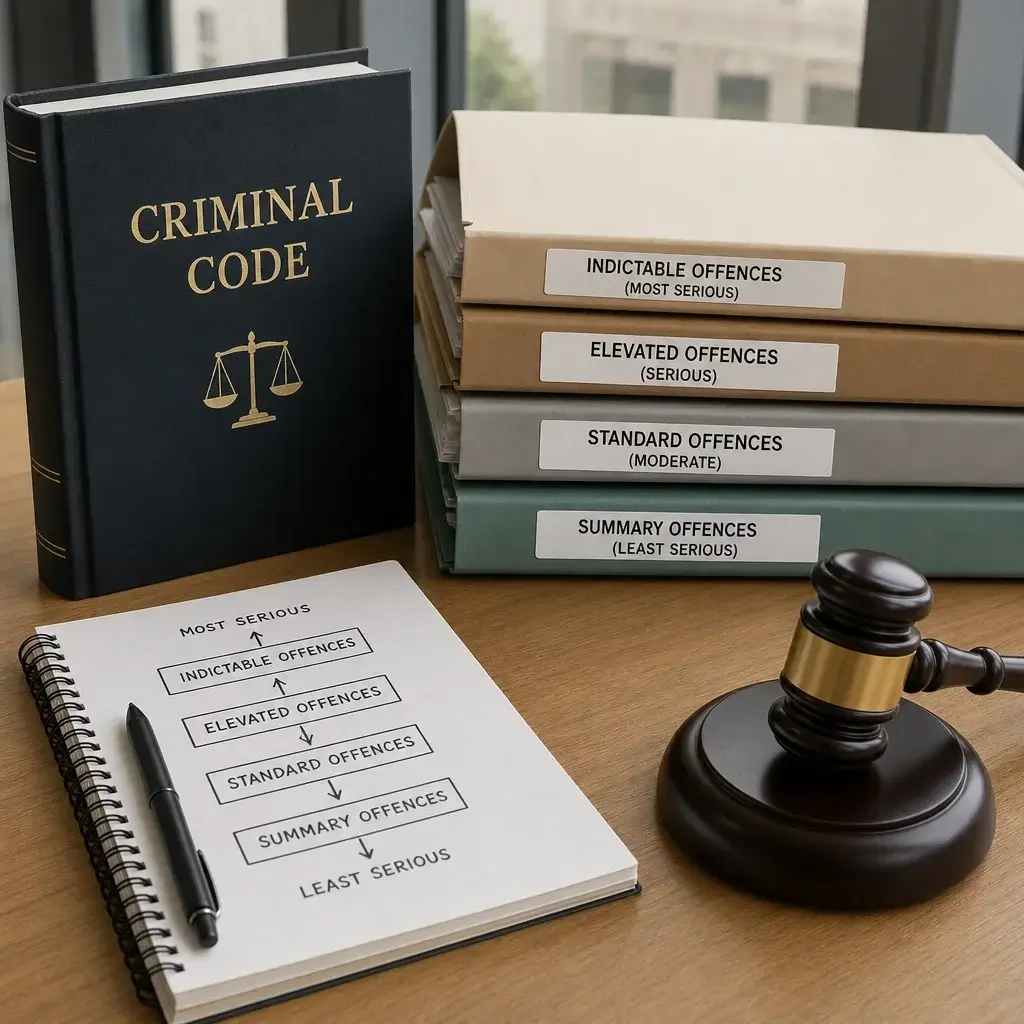
The usual levels of assault in Canada are common assault, assault with a weapon or assault causing bodily harm, and aggravated assault. They are distinct Criminal Code offences, and the facts alleged, injuries, and presence or use of a weapon can substantially change the legal and practical issues.
Common assault is generally charged under section 266 and does not require injury. Assault with a weapon or assault causing bodily harm is addressed by section 267. Aggravated assault under section 268 concerns wounding, maiming, disfiguring, or endangering life.
If police allege a weapon was carried, used, or threatened, read about an assault with a weapon sentence Canada and speak with a weapons & firearms defence lawyer in Toronto about the specific allegation. For a closer explanation of the most serious category, see what is aggravated assault.
Can a case end without a conviction?
Some assault cases may end without a conviction, but the available outcome depends on the evidence, facts, Crown position, and applicable process; a complainant cannot unilaterally cancel a criminal charge. A peace bond under section 810 of the Criminal Code is not an acquittal and may involve conditions for a defined period.
Alternative measures or diversion may be available in some cases, but availability depends on the circumstances and local Crown practices. Read assault causing bodily harm first offence for a more detailed discussion of possible non-conviction paths, eligibility, and record implications.
FAQ about defending an assault charge
What is the best defence against an assault charge?
There is no single best defence. The strongest approach may be self-defence, accident, lack of intent, consent in a limited context, mistaken identity, unreliable evidence, a Charter issue, or reasonable doubt based on the whole record.
What if the accusation is false or police have the wrong person?
Preserve evidence that can be tested: complete messages, location data, receipts, video, names of neutral witnesses, and a private timeline. Do not contact the complainant to argue about the allegation, even if you believe it is false, particularly if a release term prohibits contact.
What must the Crown prove, and how much evidence is needed?
The Crown must prove the elements of the alleged offence and your identity beyond a reasonable doubt. One credible and reliable witness can potentially be enough, but the judge must assess that evidence in the context of all inconsistencies, records, video, and other evidence.
What types of evidence help win an assault lawsuit?
This page addresses a criminal assault charge, not a civil assault lawsuit. In a criminal prosecution, the Crown must prove guilt beyond a reasonable doubt; a civil claim is a separate court process with different parties, procedures, remedies, and a different standard of proof. In either setting, reliable original records, neutral witnesses, video, messages, and documentation of timing can be important.
Why is early legal representation important after an assault charge?
Early advice can help you understand release conditions, avoid an alleged breach, preserve evidence before it is lost, and respond appropriately as disclosure arrives. It also allows counsel to assess the specific charge rather than relying on assumptions about what police or the complainant may say.
Speak with a Toronto criminal defence lawyer
After an assault charge, early advice can help you follow release conditions, preserve material that may disappear, and understand the Crown’s evidence before you make decisions about the case.
Call 647-351-HELP (4357) or book a free consultation to discuss your case with Jeffrey I. Reisman.